Hey everyone, it’s Jake here from your go-to rock drill supplier, and if you’ve ever stood on a job site watching a rock drill chug away slower than a tired sloth, you already know this: 9 times out of 10, the rock’s not the drill’s fault. I’ve been in this game for 12 years, fixing drills, selling them, and geeking out over why some rocks eat bits for lunch and others let you breeze through like butter. Today, I wanna break down how rock structure totally wrecks or makes your drill’s performance—no boring textbook jargon, just real stuff I’ve seen on job sites from construction in Denver to mining down in Arizona. Rock Drill

First off, let’s get one thing straight: “rock structure” isn’t just “how hard the rock is.” Hardness matters, but it’s the little stuff—cracks, grain size, how the layers are stacked—that will make you call your drill’s tech at 2 a.m. or knock out a full shift without a single hiccup. I recently had a guy reach out saying his new drill was garbage, it was taking twice as long to drill a 10-foot hole into some granite for a bridge abutment. Turned out, the granite had a ton of tight, horizontal fractures running right where he was drilling. His drill was set to hammer straight down, so every time it hit a fracture, the rock would shift a tiny bit instead of the bit biting in. We adjusted his thrust and hammer pressure, and boom—he was back to his usual speed. That’s the kind of stuff that trips up even the most seasoned operators.
Let’s start with fractures, because they’re the #1 culprit I see messing with drill performance. Fractures are just tiny, natural breaks in the rock, right? There’s all types—micro-fractures you can only see under a microscope, big joint sets that are visible to the naked eye, even fault zones where the rock’s been smashed into a million pieces. When a drill bit pushes into rock, it’s supposed to crush and chip the material, right? But if there’s a fracture in the path of the bit, that crushing force goes into moving the rock instead of breaking it. Think of it like hitting a thick ice cube that’s got a crack through it—whack it straight on, and it’ll slide a little instead of splitting. Same thing with rock.
Now, the orientation of the fractures? That’s huge. If fractures are parallel to the direction you’re drilling, your bit will slip all over the place, it’ll bounce so bad you’ll be replacing bits every other hole. If they’re perpendicular, you can drill way faster because each impact from the hammer hits solid rock, no give. I had a mining client last year who was drilling blast holes in a deposit with vertical fractures all along the ore zone. His drill was set for standard horizontal drilling, so every time he tried to drill at a 45-degree angle, the bit skidded. We swapped his bit for one with a wider, more aggressive nose, told him to bump up the rotation speed just a little, and he cut his drilling time by 30% that week. Fracture spacing matters too—if they’re super close together, like in a crushed fault zone, the rock is way less dense, so the drill doesn’t need as much hammer force, but you have to watch out for the hole collapsing mid-drill. If they’re far apart, it’s solid rock, so you need more oomph.
Next up, grain size and texture, which I’ve found is what separates a good operator from a great one. Rocks are made of minerals stuck together, right? The size of those mineral grains makes a massive difference in how they react to a drill bit. Coarse-grained rocks, like granite or gabbro, have big, interlocking grains that are super strong—they take more hammer force to break, but once the bit bites, it’s consistent. I drilled a 20-foot hole in a granite outcrop last year, coarse grain, no big fractures, and it was smooth sailing the whole way. The bit wore evenly, no chipping, no bouncing. But fine-grained rocks, like basalt or shale, are way trickier. Their tiny grains stick together tighter, but they’re more brittle. Wait—brittle sounds like it’d be easy to break, right? Nope, not when it’s fine-grained. The force from the hammer doesn’t chip those tiny grains; it just compacts the rock around the hole, so the bit has to work twice as hard to push through. I had a construction crew laying a pipeline in fine-grained sandstone and they were burning through bits in 5 holes until we adjusted the hammer’s frequency—higher frequency, smaller impacts, which worked better for brittle fine-grained rock than lower, harder hits.
Then there’s foliation and bedding planes, which are basically layered rock. You see this all the time in sedimentary rocks like limestone or sandstone, and even some metamorphic rocks like slate. Layers stacked on top of each other, separated by tiny gaps where the mineral bonds are weaker. This is a huge one because the angle of those layers to your drill hole changes everything. If you drill parallel to the bedding planes, the bit will slip between the layers instead of breaking them—drilling speed drops like a rock, bits wear out fast, and sometimes the hole just caves in. If you drill perpendicular to the bedding, though, it’s like drilling through a stack of plates sideways—each impact hits solid rock, so speed is way higher. I had a residential client putting in a foundation for a new garage, and he was drilling into limestone that had layers at a 30-degree angle. He was drilling straight down, and his drill was stuttering nonstop. We suggested tilting the drill 30 degrees to match the layer angle, and he told me later that he finished all 8 holes in half the time he planned, and only needed one new bit instead of four. It’s little adjustments like that that make all the difference.
Wait, let’s not forget porosity—how much empty space is in the rock. Porous rocks, like pumice or some sandstones, have tiny air pockets or gaps between grains. When the drill bit hits these gaps, the impact force doesn’t transfer through the rock like it does in solid rock. The bit will bounce, or you’ll get “bit wandering” where the hole veers off course. I had a water well driller friend who was working in porous sandstone, and his holes kept going crooked. We recommended he use a pilot bit first, then ream with a larger bit—so the pilot would cut a straight path, and the reamer would clean it out. That fixed the wandering, and he said his well depth accuracy went from 90% to 100%. Porosity also affects dust levels, by the way—porous rock makes way less dust when drilled, which is good for job site air quality, but bad because it can mess with drill performance. The dust can clog up the bit’s flutes, so you have to blow air through the drill more often to clear it. Pro tip: if you’re drilling in porous rock, crank up your air compressor a little to keep those flutes clean.
Now, let’s talk about how all this ties into what we sell at our rock drill company. A lot of guys call us asking for the “fastest drill on the market,” but I always ask them to send a pic of the rock they’re drilling. Because if they’re drilling fractured granite, a drill with a high rotation speed and adjustable hammer force is better than a super heavy, high-horsepower model. If they’re drilling soft, porous sandstone, a lighter, more maneuverable drill with better air flushing is the way to go. I once had a client bring in a drill that was way too powerful for the sandstone he was working with—he was breaking bits every three holes because the hammer force was too much for the brittle, porous rock. We traded him up for a lighter drill with lower hammer pressure, and he saved over $2,000 in bit costs in just two months. That’s the value of knowing how rock structure affects drill performance, not just selling the biggest, baddest drill on the shelf.
Another thing I’ve noticed over the years: weathering. Rock that’s been exposed to rain, wind, and temperature changes is way softer and more fractured than fresh, unweathered rock. I drilled a hole in a granite boulder that had been sitting in a field for 50 years, and it was 30% easier to drill than a fresh granite outcrop I drilled the next week. The weathering had created tiny, pervasive fractures all through the boulder, so the bit didn’t have to work as hard. But weathered rock is also way more prone to hole collapse, so you have to use casing or go slower to keep the hole open. I once had a road crew drilling culvert holes in weathered rock, and half their holes caved in because they were drilling too fast in the soft, fractured material. We adjusted their drilling speed and added water to the drill to lubricate the hole, and that fixed the collapse problem.
Let’s get real for a second—this isn’t just tech talk for guys in hard hats. Bad drill performance costs you time, money, and headaches. I’ve seen job sites shut down for days because a drill wasn’t matching the rock structure, operators burning out because they’re fighting a drill that won’t bite, and companies wasting thousands on bits that wear out in hours. The good news? It’s all solvable once you understand how rock structure interacts with your drill. You don’t need a geology degree—just pay attention to the rock: look for cracks, check the layers, feel how hard it is as you tap it with a hammer, and adjust your drill settings accordingly.
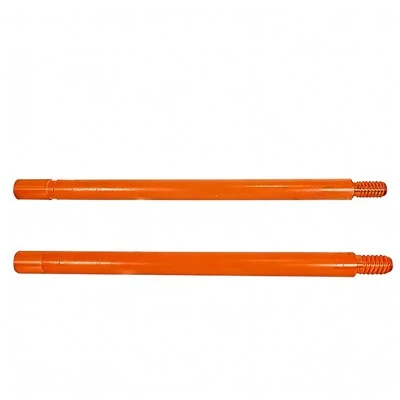
And hey, if you’re dealing with a drill that’s not performing like it should, and you’ve checked the bit, the drill’s oil, the air pressure, and it’s still off… 9 times out of 10, it’s the rock. I’ve been there, I’ve fixed it, I’ve helped dozens of clients swap out drills or adjust settings to match their rock. That’s why we’re here at our rock drill company—we don’t just sell drills, we help you make them work for your specific job, your specific rock. Whether you’re drilling foundation holes in residential limestone, blast holes in mining granite, or water wells in porous sandstone, we’ve got the knowledge and the gear to get you drilling faster, cheaper, with fewer broken bits and less downtime.
Coupling If you’re tired of dealing with a drill that’s underperforming, or you’re starting a new job and wanna make sure you’ve got the right setup, reach out to us. We can help you match the right drill to your rock type, give you tips on adjusting settings, and even help you pick the best bits for your job. No sales pitch, no pushy guys, just real advice from someone who’s been in the trenches with you. Don’t waste another day fighting your drill—let’s get it working with the rock, not against it.
References
- Cooper, T. H. (2019). Rock Mechanics for Drilling Operations. Elsevier.
- Reed, J. D. (2021). Practical Drilling Performance Analysis for Construction and Mining. Wiley.
- National Institute for Occupational Safety and Health (NIOSH). (2020). Effects of Rock Structure on Drilling Efficiency. U.S. Department of Health and Human Services.
Super Rock Machinery Equipment (Qingdao) Co., Ltd.
We are one of the most professional rock drill manufacturers and suppliers in China, featured by quality products and good price. Please feel free to buy advanced rock drill for sale here from our factory. Welcome to view our website for more information.
Address: No. 45, Pengwan Road, Qianwan Bonded Port Area, Qingdao Sub-district, Free Trade Pilot Zone, Shandong China
E-mail: sales@superrocktools.com
WebSite: https://www.superrocktools.com/
