If you’ve ever worked with industrial machinery, EVs, or even big power tools, you’ve probably heard the terms “electric motor” and “transmission shaft” thrown around a lot. But let’s be real—most folks who aren’t mechanical engineers just see them as two separate parts that “sort of connect” and “make stuff spin.” As a transmission shaft supplier, I get it: I spend every day talking to people who design these systems, fix them, or just need a part that actually works, and a huge number of them don’t fully grasp how these two pieces actually interact. Skip the boring textbook jargon with me—I’ll break it down like I would over a coffee at a trade show floor, no stuffy equations, just what matters for you. Transmission Shaft
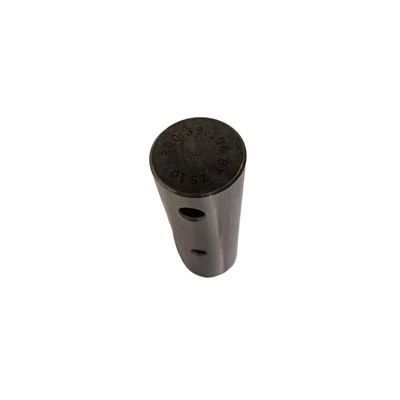
First, let’s kick off with the basics that even newbies can follow. An electric motor’s whole job is to convert electrical energy (battery power, grid juice, whatever) into rotational torque— that’s the twisting force that makes wheels, conveyor belts, or machine cutbits move. Without a way to move that torque from the motor’s spinning inner part (called the rotor, if you didn’t know) to whatever needs power, a motor’s just a fancy hunk of metal that hums but does nothing. That’s where the transmission shaft comes in. It’s not some random stick; it’s the middleman built to carry that torque where it’s needed. But it’s way more than just a stick with two ends to bolt on.
Wait, let’s talk about that “middleman” part more, because there’s way more to their interaction than just “bolt motor to shaft to next part.” There are three key interactions that make or break a system: torque transfer, alignment compensation, and speed tuning. Let’s start with torque transfer, since that’s the big one. If the motor is the engine, the transmission shaft is the driveshaft, the line that moves the twist. But here’s the catch: motors don’t always sit right next to the thing they’re powering. For example, in an electric delivery van, the motor’s mounted near the front, but the wheels are at the back. A transmission shaft runs the length of the van, moving torque from front motor to rear axle. In an industrial conveyor, the motor might sit on a side wall, so the shaft turns a corner to reach the roller.
But torque transfer isn’t just “move the force”—it has to do it without wasting energy. If the shaft is too thin, it twists under load. If it’s too thick, it’s heavy, adds unnecessary weight, and drains power. As someone who’s built transmission shafts for 10 years, I’ve seen way too many clients come to us with a broken shaft because they went cheap on a part that couldn’t handle the motor’s peak torque. For example, a 15kW industrial motor puts out around 190 Nm of torque at 1000 RPM. A flimsy steel shaft might handle that, but if the motor spikes to 250 Nm (which happens when you start a heavy conveyor), it snaps. That’s why matching the shaft’s material and diameter to the motor’s specs is non-negotiable. We work with steel, aluminum, and even carbon fiber shafts—each for different motor types, from small EV traction motors to big industrial motors.
Next up, alignment compensation, and this is where 90% of problems come from. Electric motors and the parts they power (called driven loads, by the way) almost never line up perfectly. Even if you bolt them on, slight misalignments happen from manufacturing tolerances, machine wear, or temperature changes that make metal expand. If you try to force a rigid shaft between a motor’s rotor and a load, that’s like trying to fit a square peg in a round hole—you’ll put extra stress on both, cause vibration, and wear out parts way faster. That’s where some transmission shafts have special couplings or splines (grooved ends that lock together) built in, which let the shaft adjust for tiny misalignments.
Let me give a real example I saw last year. A client had a 50kW electric motor powering a printing press. They tried a cheap, rigid shaft from a random supplier, and within 6 months, the motor’s bearings were shot, and the shaft was bent. They brought it to me, and I swapped in a transmission shaft with a flexible jaw coupling built right in. Now, the shaft absorbs the tiny shifts between the motor and the press’s roller, so the motor’s bearings don’t have to take the hit. That’s the key interaction here: the shaft isn’t just a torque carrier—it’s a shock absorber for misalignments. If you’re working with any motor-driven system that has moving parts, skipping a quality shaft for a cheap one means you’ll end up paying for repairs way more than you saved on the part.
Third interaction: speed tuning, or adjusting how fast the motor’s rotation gets to the load. Wait, a lot of people forget that electric motors spin super fast—like, 10,000 RPM is normal for a small EV motor, or even 15,000 RPM for some industrial ones. But most driven loads don’t need that speed. A car’s wheels spin around 1,000 RPM when you’re cruising on the highway, not 10,000. A conveyor roller spins at 50-100 RPM, not 10k. So how do you slow that down? Sometimes people use gearboxes, but a lot of times, the transmission shaft works with those gearboxes to fine-tune the speed, or even acts as part of the tuning itself. For example, a hollow transmission shaft can be paired with a gear reduction unit to cut the motor’s high RPM down to the load’s needed speed, without wasting power.
Here’s a pro tip I share with every client: if your motor’s output is way faster than your load’s needs, don’t just guess at the shaft’s length or diameter. Tell us both the motor’s RPM and your load’s required RPM, and we can design a shaft that works seamlessly with whatever gearbox you’re using. We’ve had clients who tried to skip that step, and their system would either spin way too fast (wasting energy, even overheating) or too slow (not enough power for their operation).
Now, let’s talk about real-world use cases, because theory’s great, but seeing how this plays out is way more useful. Let’s start with electric vehicles, since that’s the biggest growth area right now. In an EV, the electric motor is usually mounted to the chassis, and the transmission shaft connects the motor’s rotor to the differential, which then connects to the wheels. The shaft has to be lightweight (to save battery power), strong enough to handle the motor’s high torque during acceleration, and flexible enough to absorb the slight up-and-down movement of the suspension when driving over bumps. If the shaft was too rigid, it would crack every time the wheel moves over a pothole. That’s why most modern EVs use carbon fiber transmission shafts these days—they’re 30% lighter than steel, just as strong, and handle movement way better.
Another common use case: industrial automation. Think about a robotic arm on a factory line, or a CNC machine that cuts metal. The electric motor that powers the arm’s joints is tiny, but it needs super precise torque and speed control. The transmission shaft here has to be ultra-stiff—any twist would make the arm misalign, ruining the part being made. So we use precision-machined steel shafts with splined ends that lock perfectly to the motor and the joint. No flexibility here—we need 100% accurate torque transfer, because even a 1-degree twist would make the CNC cut wrong, costing thousands in wasted metal.
Wait, what about common mistakes people make with this interaction? Let’s list the top three I see every week. First, mismatched torque specs. I can’t tell you how many times a client comes to us with a motor that’s rated for 300 Nm of peak torque, and they bought a shaft rated for only 200 Nm. The shaft will twist, vibrate, and fail fast. Second, ignoring misalignments. Even if you measure alignment perfectly at installation, metal expands and contracts when it gets hot or cold—like, a steel shaft can expand 1mm if it’s heated 50 degrees F. If you have a rigid shaft, that 1mm shift will put so much stress on the motor and load bearings that they’ll burn out in months. Third, skipping maintenance. A transmission shaft isn’t a “set it and forget it” part. We tell clients to inspect the shaft every 6 months for rust, bends, or worn couplings. I had a client last year who didn’t check his shaft, and a small rust spot turned into a crack that snapped the shaft mid-operation, shutting down his entire factory for 3 days. Ouch.
Now, why does this matter for you, especially if you’re sourcing transmission shafts? At the end of the day, the interaction between motor and shaft is all about reliability, efficiency, and cost. A bad match here means downtime—time you can’t produce, money you lose. A good match means your system runs smoother, uses less energy, and lasts longer. As a transmission shaft supplier, our job isn’t just to sell you a stick. It’s to understand your motor, your load, your environment, and build a shaft that works with both. If you’re working on an EV, industrial machine, robotics, or anything in between, we’ve designed shafts for every type of electric motor out there.
Whether you’re a design engineer building a new machine, a maintenance manager fixing a broken line, or a shop owner just needing a part that actually fits right, getting this interaction right is make-or-break. You don’t need a PhD in mechanical engineering to get it—you just need to partner with someone who knows how motors and shafts work together, not just sells parts.
If you’re tired of buying shafts that don’t fit, snap too soon, or waste your energy, it’s time to talk. We can walk through your specific setup, match the right shaft to your electric motor, and make sure it works perfectly with whatever you’re powering. Don’t let a bad shaft be the weak link in your system—reach out to chat about your project.
Gear References
- J. G. Thompson, “Power Transmission Systems for Electric Motors,” Industrial Press, 2019.
- S. R. Schmid, “Driveshaft Design for Electric Vehicles,” SAE International, 2021.
- American Gear Manufacturers Association (AGMA), “Coupling Selection and Alignment Guidelines for Motor-Driven Systems,” AGMA Standard 9000-A19, 2019.
- Carbon Fiber Reinforced Polymer Shafts for High-Torque Applications, Journal of Mechanical Design, Vol. 142, No. 5, 2020.
- International Electrotechnical Commission (IEC), “Guidelines for Electric Motor and Driven Load Integration,” IEC 60034-14, 2018.
Yancheng Botu Transmission Machinery Co., Ltd.
As one of the most professional transmission shaft manufacturers and suppliers in China, we have world-leading production equipment and strong manufacturing capabilities. Please rest assured to wholesale cheap transmission shaft for sale here from our factory. Contact us for more details.
Address: No. 33, Yongxing Road, Economic Development Zone, Jianhu County, Yancheng City, Jiangsu Province
E-mail: 15261979878@163.com
WebSite: https://www.ycbtcdjx.com/
