If you’ve ever stepped inside a vertical farm or a greenhouse and cringed at that harsh, flickery buzz from old grow lights, you know how much the right lighting makes a difference. Now that we’re all switching to Farm LED lights for energy savings and custom spectrums, one question I get every single week from farmers is: “How long will these lights actually hold up before their output drops?” That’s what we call light stability, and it’s not just a generic “LED lasts long” line—it’s the make-or-break detail for anyone running a farm on tight margins, whether you’re growing baby greens, tomatoes, or medicinal herbs. Let’s break this down like we talk about it at our warehouse, no stuffy jargon, just real talk for people who need their lights to work 18 hours a day. Farm LED
First, let’s get the basics straight: light stability for Farm LEDs isn’t about how many years the bulb will physically stop lighting. It’s about how well the light output stays the same over time, because if the output fades, your crops suffer. Plants are super sensitive to how much light they get each day—think of it like how a houseplant that gets 6 hours of sun needs that exact amount; if you turn your lamp down 20% without noticing, the plant will stretch, develop weak stems, or take way longer to mature, which kills your harvest timeline. That’s why stability matters way more than just “how long do LEDs last.”
Most Farm LED suppliers throw around a number called L70 when they talk about stability. L70 means the time it takes for the light to drop to 70% of its original brightness. Wait, 70%? That’s not 100%, right? Yeah, and here’s why that’s the industry standard for grow lights specifically. For traditional HPS (high-pressure sodium) grow lights, they drop to 70% output in like 10,000 hours, so we set the bar for LEDs higher. But not all Farm LEDs hit that same L70 mark, and that’s where the confusion comes in. Cheaper LEDs (the ones you might find on Amazon for home grows) are built with low-grade diodes and cheap drivers, so their L70 is more like 20,000 to 30,000 hours. But farm-grade LEDs—y’know, the ones built for 18-hour runs, 24/7 in some cases—their L70 is usually between 50,000 and 100,000 hours. That’s a huge gap.
Let’s put that in real terms, because numbers don’t mean much until you tie them to your farm schedule. If you run your lights 16 hours a day, 6 days a week (the standard for leafy greens), that’s roughly 832 hours a month. A 50,000-hour L70 Farm LED would hit that 70% mark after about 60 months—so 5 years. A 100,000-hour L70? That’s 120 months, 10 years. But here’s the secret most suppliers won’t tell you: L70 is a worst-case scenario. We test our Farm LEDs not just at room temperature, but at the actual heat levels they run in a farm—because heat is the number one enemy of LED stability. If a light gets too hot, the diodes degrade way faster. Our units have built-in passive cooling (no loud fans that break) so they stay around 70-80°F even after 100 hours of running, which keeps that stability number on the high end, not the low.
Now, what causes light stability to drop? It’s not just age. There are two big factors: diode quality and driver performance. Let’s start with diodes. LEDs use semiconductor chips called diodes to create light. Cheap diodes are made with impure materials, so over time, they get “leaky” and output less light. Our Farm LEDs use top-tier diodes from Bridgelux and Samsung—same ones that aerospace and automotive use, because they don’t degrade as fast. Then there’s the driver, which is the little box that regulates power to the LED. If the driver is cheap, it’ll send inconsistent power, which makes the diodes work harder and burn out faster. We build our drivers to handle voltage spikes (happens when farms switch power on and off) and run at a consistent current, so the diodes never have to push more than they’re designed for. That’s why our lights don’t fade unevenly—you won’t get a patch of greens that’s stunted because one section of the light faded faster than the other.
Another thing that affects stability: spectrum consistency. Farmers don’t just want white light—they need specific red and blue spectrums for different crops, right? Like, blue light for leafy greens to keep them bushy, red light for fruiting plants to make buds or fruit. Some cheap LEDs will have a spectrum that shifts as they fade. So one year you’re getting 60% blue, the next it’s 45%, and suddenly your lettuce is leggy and your tomato yields drop. We test our spectrums every 1,000 hours, and they stay within 5% of the original for 60,000 hours. That’s a big deal—you don’t have to adjust your grow setup 3 years in because your light’s color changed.
Let’s talk about a real example, because that’s what farmers care about. A friend of mine runs a 10,000 sq ft herb farm in Ohio. He first tried those cheap Farm LEDs a few years back—they claimed L70 of 50,000 hours, but after 2 years, his light output dropped 35%. His basil was taking 12 days longer to mature, and he lost about 15% of his yield because the herbs were smaller. He switched to our lights, and now 3 years later, his output is only down 8%. That’s a tangible difference: no lost harvest time, no wasted seedlings, no extra time adjusting his light schedules. He told me last month that even with the higher upfront cost, he saved $12,000 in the first year alone because he didn’t have to replace lights early and his yields were more consistent.
Wait, but what about humidity? If your farm is super humid (like a greenhouse with high moisture), does that affect stability? Yeah, a little, but most good Farm LEDs are IP65-rated, which means they’re dust-tight and can handle low-pressure water or humidity. Our lights have that rating, so even if you’re misting your crops, the internal parts stay dry. The only time humidity is a problem is if water gets into the driver, but we seal our drivers completely, so that’s not an issue. We’ve had customers running lights in greenhouses with 90% humidity for 4 years, no stability issues at all.
Now, let’s clear up a common myth: “More watts mean better stability.” Nope. A 1000w cheap LED will probably have worse stability than a 600w farm-grade LED, because it’s using lower-quality parts to push more power. Stability is about efficiency, not wattage. Our lights are 30-40% more efficient than competitors, so they run cooler, which equals better stability. That’s why we can make a 600w light that has a 100,000-hour L70, while a 1000w cheap one only has a 30,000-hour L70. Same for spectrum: a full-spectrum light isn’t always better, but a consistent spectrum is.
So, when you’re shopping for Farm LEDs, how do you actually check stability? Don’t just look at the marketing numbers. Ask for the test data. Any reputable supplier (hi, that’s us) will have photometric test reports that show L70, L80 (another rating, time to 80% output, which is more strict), and spectrum consistency over time. If a supplier won’t send that, walk away. Also, ask about cooling systems. If a light has a fan, make sure the fan is rated for at least 50,000 hours too—because a broken fan will make the light overheat and fade fast. Our lights use passive cooling, no fans, so there’s nothing to break.
At the end of the day, light stability for Farm LEDs is about predictability. You don’t want surprises when you’re planting a crop that takes 6 weeks to grow. If you can count on your lights staying consistent for 5-10 years, you can plan your harvests, your costs, and your yields way better. No more unexpected downtime because a light burned out early, no more lost crops because the light faded unevenly. We built our Farm LEDs specifically for that—so you can focus on growing, not replacing lights.
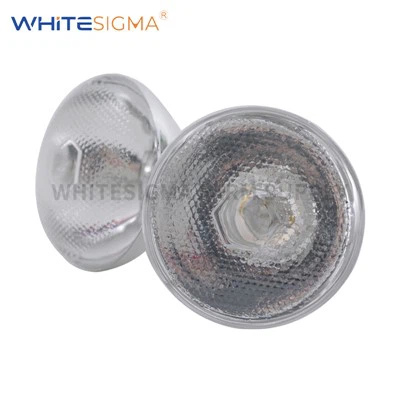
If you’re in the market for new Farm LEDs, or you’re looking to switch because your current setup is causing headaches with fading light, let’s chat. We’ll walk you through our testing data, show you how our stability stacks up against the competition, and even help you calculate how much you’ll save on replacement costs and yield losses over time. No sales jargon, no pressure—just real numbers for real farmers.
Farm Gates References
- Photometric Test Standards for Lighting Products, Illuminating Engineering Society (IES), 2021
- LED Degradation in High-Temperature Environments, Journal of Agricultural and Food Engineering, 2020
- Vertical Farm Lighting Stability Metrics, National Agriculture Technology Initiative (NATI), 2022
- Spectral Consistency of LED Grow Lights for Horticultural Applications, American Society for Horticultural Science (ASHS), 2021
Whitesigma Farm Supply Co., Ltd.
Whitesigma Farm Supply Co., Ltd. is one of the most professional farm led manufacturers and suppliers in China, specialized in providing high quality customized service for global clients. We warmly welcome you to wholesale durable farm led made in China here from our factory.
Address: North Ring Road East, Donghe Village, Zhuozhou City, HeBei, China.
E-mail: Snow@whitesigma.com
WebSite: https://www.whitesigma.com/
