Hey folks, let’s cut to the chase: if you’re an electrical engineer, plant manager, or even a small business owner who’s ever dealt with motor burnout, you know thermal overload protectors (TOPs) are those tiny, often overlooked lifesavers wired into your motor circuits. But here’s a question I get all the time from folks checking out my company’s gear—does a thermal overload protector actually do more than just “trip when it’s too hot”? Like, can it help you diagnose why your motor failed in the first place, instead of just being the part that went out with it? Thermal Overload Protectors
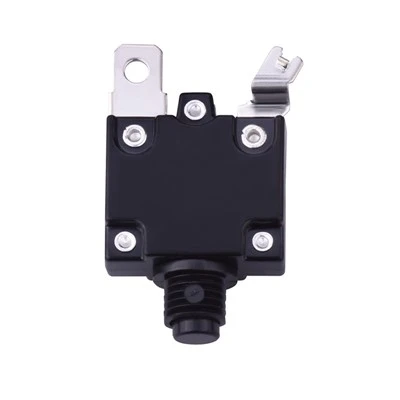
Full disclosure: I’ve been selling TOPs for over 12 years now, so I’ve seen every trick in the book when it comes to motor faults and protector flubs. Let’s break this down like I’d explain it to a guy who just had to replace three 10-hp conveyor motors in a week—no fancy jargon, just real-world stuff.
First, let’s remember what a standard thermal overload protector does, right? Most basic TOPs are bi-metal strip devices. When your motor pulls too much current (overload) or overheats for too long, the bi-metal strip bends from heat and snaps a little switch, cutting power to the motor before the windings fry. That’s the basic job—prevent catastrophic motor death. But diagnostic function? That’s where the line gets blurry, and a lot of people miss what a good TOP can tell you.
Wait, let’s start with the “can it even collect data” part. A lot of cheap, off-the-shelf TOPs are just that—simple bi-metal switches with no extra wires. They work, but they only give you two outcomes: tripped or not tripped. If your motor burns out, you grab a multimeter, check the protector, find it’s open, replace it, and hope the next one doesn’t blow. That’s it. No clue if it was a locked rotor, a bad phase, or just overuse.
But here’s where our line of TOPs comes in—we make a mix of standard bi-metal and “intelligent” thermal overload protectors for industrial and commercial use, and the intelligent ones do have a basic diagnostic hook. Let’s talk about those first, because that’s where the real value is. Modern smart TOPs are wired to not just trip, but to monitor current draw, ambient temperature, and trip history, right? Most of them log how many times they tripped, how hot it got before tripping, and even how long the overload lasted. That’s not just “tripping”—that’s fault data.
For example, last year a food processing plant client came to me swearing their TOPs were garbage. They kept tripping on the mixer motors every other day, so they just upped the current rating on the protectors to stop it. Big mistake—their motors started burning out left and right. I sent our tech out with a smart TOP prototype, and when we pulled the trip logs, we saw the protectors were tripping only during the night shift, when the plant’s refrigeration system kicked in. That drew extra current, which heated up the mixer’s motor windings even before the TOP could react. They adjusted the mixer’s run schedule, and no more trips. If they’d had a basic TOP, they would’ve just kept replacing parts and blaming the protector.
But wait, what about standard, non-smart TOPs? Can they do any diagnostics? Let’s be honest—they can’t log data, but they can tell you the type of fault if you know how to read them. I see this all the time: when a TOP trips from a locked rotor, it’s a different kind of heat-related failure than a trip from a short circuit. A locked rotor means the motor won’t turn, so it pulls a huge current surge for seconds or minutes— that makes the bi-metal strip heat up fast, like, rapid thermal expansion. A short circuit? That’s instant heat, but it’s usually accompanied by a blown fuse or circuit breaker, so the TOP might not even have time to trip. A gradual overload, like a motor running with a worn belt that increases friction, means the bi-metal strip heats up slowly over hours, not seconds. So if you take the time to inspect the tripped TOP’s strip, you can guess the fault type. It’s not as precise as a smart device, but it’s a free diagnostic tool you’re ignoring if you just toss the old protector after a trip.
Now, let’s talk about myths. A lot of folks think a TOP is a diagnostic device, full stop. No, that’s not true. If your TOP trips, that’s a symptom, not a diagnosis. It’s like having a fever— the fever tells you something’s wrong, but you still have to find out if it’s the flu or an ear infection. The TOP is the fever indicator, not the doctor. But here’s the thing: most people don’t check the “symptoms” of the TOP before replacing it. They just swap it out, assuming the protector is bad, when maybe it was just doing its job to protect the motor from a bigger fault.
Another myth: adding a TOP with diagnostic function is too expensive. I hear that a lot from small shops or startups. Yeah, smart TOPs cost a few bucks more than the standard ones, but the cost of a burnt motor (we’ve seen 5-hp conveyor motors run $1,200 to replace, plus downtime that costs a restaurant or factory $300 an hour) way outweighs the extra $15 or $20 for a diagnostic-capable TOP. For our smallest commercial customers—like a guy with a deli display case motor—we even carry budget diagnostic TOPs that log just trip count and peak current, so he can see if his display is overheating because the fan’s clogged, not because the protector is bad.
Wait, let’s get into a real fault analysis example to make this concrete. Last quarter, a packaging company reached out because their case-sealing motors kept failing. They’d been replacing TOPs and motors every 2 weeks, and they were fed up. We installed our smart TOPs and pulled the data after a month. The logs showed trips every time the line ran at full speed for 4+ hours. The TOP’s ambient temp was only 82°F, but the motor’s winding temp hit 185°F—way above the motor’s 155°F rating. We checked the motor, and sure enough, the bearings were worn, causing extra friction and heat. If we’d just looked at the old tripped TOP, we would’ve thought it was a random overload, but the diagnostic data told us it was bearing wear. They replaced the bearings, no more issues. That’s the power of a TOP’s diagnostic function—it doesn’t fix the fault, but it points you to where to look.
Now, what are the limitations? Let’s be real, no device is perfect. Basic TOPs can’t log anything, so their “diagnostics” are just visual inspections of the bi-metal strip. Smart TOPs only work if you wire them correctly—if you skip the data cable, they’re just regular TOPs. Also, some cheap smart TOPs only log basic data, not phase imbalances, which is a huge fault cause (most industrial motor faults are phase-related, not overload). That’s why our company tests every smart TOP for phase imbalance monitoring, so you’re not wasting money on a device that misses the big stuff. A lot of suppliers skip that, so read the fine print—if a TOP says it has diagnostic function, ask what data it actually collects.
Another limitation: a TOP can only protect against thermal overloads and short circuits, right? It can’t tell you if your motor has a bad winding insulation, or if it’s misaligned with the load. For that, you need a motor analyzer, not a TOP. But that’s okay—we’re not saying replace your diagnostic tools, we’re saying use the TOP you already have to do some initial fault checking. It’s like, you don’t need a full blood panel to know you have a fever—you just need a thermometer, and the TOP is that thermometer for your motor.
Let’s circle back to the original question: Do thermal overload protectors have a diagnostic function for fault analysis? The answer is: it depends on what kind of TOP you’re using. Basic, non-intelligent TOPs can give you basic visual clues about fault type if you inspect them post-trip, but they can’t log data or give you precise root cause. Intelligent, modern thermal overload protectors have built-in diagnostic capabilities—they log trip history, current draw, ambient and motor temp, so you can pinpoint why your motor failed, not just that it failed.
For anyone in the market for a TOP, here’s my advice: Don’t just buy the cheapest one. If you’re running equipment where downtime costs you, go with a diagnostic-capable model. It’s not a magic fix, but it’s a tool that can save you a ton of time and money on fault analysis. If you’re just replacing a TOP on a small appliance, a basic one works fine, but even then, take 2 minutes to look at the old strip before you toss it—you might learn something.
I’ve seen so many customers write off TOPs as “just a part that breaks,” but the good ones are way more than that. They’re your first line of defense, and if you use their diagnostic capabilities, they’re also your first line of fault detection. Stop treating them as a disposable switch—start using them to figure out what’s really going on with your motors.
If you’re dealing with recurring motor faults, or you’re curious about upgrading to a thermal overload protector with diagnostic features, hit me up to chat through what your setup needs. We can walk through your specific motor sizes, load types, and whatever faults you’re seeing, no hard sell, just real talk from someone who’s been in this game for years.
Bimetallic Strips References
- International Electrotechnical Commission. IEC 60947-4-1: Low-Voltage Switchgear and Controlgear – Part 4-1: Contactors and Motor-Starters – Electromechanical Contactors and Motor-Starters. 2020.
- National Electrical Manufacturers Association. NEMA MG 1-2023: Motors and Generators – Part 1: General Purpose, Fractional Horsepower, and Integral Horsepower Motors. 2023.
- IEEE Industry Applications Society. Electrical Motor Fault Detection and Diagnosis: A Review of Current Techniques and Commercial Devices. IEEE Transactions on Industry Applications, vol. 58, no. 3, 2022, pp. 3145–3157.
- Thermal Protection Systems Association. Diagnostic Capabilities of Thermal Overload Protectors for Industrial Motors. Annual Technical Conference Proceedings, 2021, pp. 112–119.
Yueqing Ganen Electronic Technology Co., Ltd.
As one of the most professional thermal overload protectors manufacturers and suppliers in China, we also support customized service. Please feel free to wholesale advanced thermal overload protectors in stock here from our factory. Welcome to contact us for quotation.
Address: No.6 yonghe 3rd Road, Chengdong Industrial Functional Zone, Chengdong Street, Yueqing City, Wenzhou City, Zhejiang Province, China.
E-mail: daiaohui@163.com
WebSite: https://www.ganensj.com/
