Let’s be real—running an espresso machine is equal parts art and headache, right? I’ve been in the espresso game for over 10 years now, and let me tell you, more often than not, the little things people brush off are the ones that tank their shots and leave customers side-eyeing their morning coffee. One of the most common headaches I get questions about from café owners, home baristas, even random folks who bought a cheap machine from a big-box store, is filters. Wait—specifically, the filter inside your espresso machine’s group head, or sometimes the water filter that keeps your boiler running smooth. A lot of people mix those two up, and that’s where problems start. Espresso Machine

I’m not here to talk about super fancy, unobtainium filters that cost $20 a pop. I’m talking about the standard, stainless steel or nylon filters that come with every good espresso machine, and the water filters that hook up to the line if you have a plumbed-in unit. Today, we’re breaking down exactly how to tell if your machine’s filters are shot, so you don’t waste $500 on a new machine before you even need to.
First off, let’s get one thing straight: filters don’t last forever. I see people run the same set of group head filters for 5 years, and the water filter they installed once in 2018—no joke—because they “don’t need to waste money replacing small parts.” Newsflash: those small parts are the reason your shot tastes like burnt cardboard, or your boiler scales up so bad it’s a fire hazard.
The first red flag? Your shot extraction time is all off, and it’s not your grind size. Let’s say you’ve been dialing in your grind for weeks—you pull a double shot, it’s taking 45 seconds when it should be 25 to 30. Or even worse, it’s pouring in 10 seconds flat, like someone turned on a tap. I’ve had a barista come to me last month, panicking, because their usual 28-second latte shots were taking 50 seconds and tasting way too bitter. We pulled the group head filter, and it was caked with old coffee grounds and mineral residue so thick, it looked like a thin sheet of concrete. The tiny holes in the filter—called basket pores, by the way—get clogged over time, right? Coffee oils, fine grind particles, even calcium from tap water builds up in those holes, restricting how much water can flow through the grounds. If your water filter’s shot, that’s a whole other thing, but group head filters are usually the first culprit here.
Wait, but how do you tell the difference between a clogged group filter and a bad water filter? Easy. The shot quality is the giveaway. If the shot is under-extracted (watery, sour, pouring way too fast) or over-extracted (bitter, burnt, pouring way too slow), that’s group head filter territory. If the shot has weird mineral aftertastes, or your machine starts making weird gurgling noises, or the boiler has visible scaling around the steam wand? That’s almost always the water filter. Those filters are designed to catch mineral buildup before it gets to your boiler, so if they’re shot, they stop filtering and all that gunk goes straight to the parts that actually matter.
Another big one: the crema is gone, or it’s super thin and fades in 10 seconds. Crema is that golden, foamy layer on top of a good espresso, right? It’s made from the coffee’s oils and CO2 that get released when hot water pushes through the grounds. If your filter is clogged, the water isn’t flowing evenly through the puck—so some parts of the puck are over-saturated, some are under, and there’s no consistent pressure to build that nice, thick crema. I had a home user hit me up last week saying his crema was just brown water foam that disappeared before he even got it to his friend. We checked his filter—he’d run it through the dishwasher once (don’t do that, by the way—high heat warps the nylon ones) and it had little warps in the mesh. It wasn’t sitting flat in the group head, so water was channeling through the edges instead of the whole puck. That’s a filter problem, full stop.
Let’s talk about visual cues, because those are the easiest to spot. Every time you pull the group head, take 2 seconds to check the filter. If you can see dark, brown gunk caked on the inside, especially around the edges or in the small holes? That’s not regular wear—that’s a filter that’s on its last legs. Over time, that gunk won’t come off with a quick rinse or even a cycle in the ultrasonic cleaner (another thing I tell people all the time—ultrasonic cleaners are great, but if a filter’s mesh is permanently clogged, nothing fixes it). Also, check for warping. If your filter doesn’t sit perfectly flat when you lay it on the counter, if it has tiny curves or bends, that means it’s been heated too many times, or it’s got so much residue built up that it’s changed shape. A warped filter won’t seal properly against the group head, which leads to uneven pressure, uneven extraction, and just bad shots all around.
Wait, what about when you replace your filters, how often should you actually do it? I get this question nonstop. For home baristas who make 2-3 shots a day, group head filters should be replaced every 12 to 18 months. If you’re a café making 100+ shots a day? That’s every 3 to 6 months, no exceptions. Water filters? Depends on your water quality. If you have super hard water (I’m looking at you, folks in the Southwest US), replace your water filter every 2 months. If you have soft, filtered tap water, that’s every 6 months. And if you have a plumbed-in machine, some have a line filter that lasts up to a year, but again—check your machine’s manual, and if you start noticing weird tastes, swap it early.
Let me throw in a real horror story from last year, just to drive this home. A small café in Portland bought 5 new machines from us, and their manager decided to skip replacing the group filters because they “didn’t have the budget.” After 8 months, two of the machines had major boiler damage—mineral scaling so bad the heating element burned out. We ran diagnostics, and traced it right back to the water filters being completely shot, plus the group head filters were so clogged that pressure was fluctuating every time a shot was pulled. They ended up having to replace two boilers, three group heads, and all their filters anyway—costing them way more than if they’d just swapped the filters on schedule. So skipping filter replacements isn’t just about bad shots, it’s about ruining expensive machine parts.
Wait, but can’t you just clean filters instead of replacing them? Yeah, cleaning works for a while, but it’s not a long-term fix. A lot of people scrub their group filters with a toothbrush, or soak them in vinegar, or even throw them in the dishwasher. Once a filter’s mesh is permanently clogged—like, you can’t see the tiny holes anymore, or it’s warped—cleaning just doesn’t bring it back. I always tell customers: if after a good clean, your shot is still off, and you’ve already adjusted your grind, your tamp, your water temperature? It’s time for a new filter. That’s the litmus test.
Let’s make this super simple, so you don’t have to overthink it. Go check your espresso machine right now. Grab the group head, pull out the filter. Look at it. Is it caked with old coffee residue that won’t come off no matter what? Is it warped, so it doesn’t lay flat? Have your shots been taking way too long or way too short for the past couple weeks, even after you tweaked your grind? Is your crema thin or non-existent? If you answered yes to any of those, your filter’s probably toast. For water filters: have you noticed weird off tastes in your coffee, or your machine’s steam wand is scaling, or it’s making gurgling noises when you pull shots? Time to swap that too.
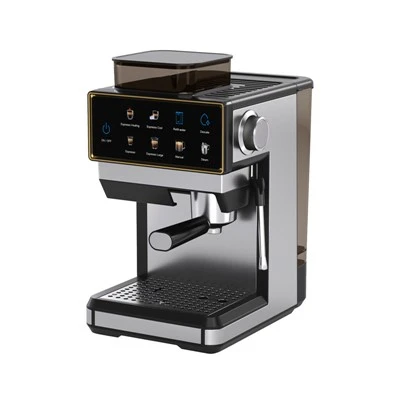
As an espresso machine supplier, my number one priority isn’t just selling you parts—it’s making sure your machine runs right, so you make great coffee. Filters are such a small, cheap part, but they’re the backbone of good espresso. I see too many people ignore them until they have a major problem, and that’s avoidable. If you’re not sure what kind of filter your machine needs, or you want to swap out old filters for high-quality ones that actually last, just reach out. We can help you figure out exactly what you need, no confusing jargon, no overcharging for fancy stuff you don’t need. Don’t wait until your next shot turns into a disaster—check your filters, replace them when they need it, and your espresso will taste way better, and your machine will last way longer.
Espresso Machine References:
- Specialty Coffee Association. (2021). Home Espresso Machine Maintenance Guide.
- International Coffee Organization. (2020). Impact of Filter Integrity on Espresso Extraction Efficiency.
- National Coffee Association USA. (2022). Hard Water Effects on Commercial Espresso Machine Components.
Foshan City Moccona Electric Co., Ltd.
With abundant experience, we are one of the leading manufacturers and suppliers of espresso machine in China. We warmly welcome you to buy bulk durable espresso machine from our factory. If you have any enquiry about cooperation, please feel free to email us.
Address: Room 202, Building 16, Tongde Intelligent Manufacturing Park (TDIMP), No.9 Guizhou Avenue East, Shangjia Community, Ronggui Street, Shunde District, Foshan City, Guangdong Province
E-mail: tim@mocconaelectric.com
WebSite: https://www.mocconaelec.com/
