If you’ve ever stopped to watch a brush motor assembly line in action, you might notice a lot of parts moving fast: statics being pressed into housings, commutators being burnished, brushes being seated tight, and shafts being aligned with near-micrometer precision. Every step is choreographed, but there’s one component you might not spot right away that’s quietly holding the whole operation together: the gearbox. As a supplier of custom brush motor assembly lines, I spend hours walking the floors of our client’s factories, troubleshooting, tweaking, and explaining why those unsung gearboxes aren’t just a “nice-to-have” — they’re the backbone of reliable, high-volume motor production. Let’s break down exactly what gearboxes do on these lines, why they matter more than most people realize, and how we design them to solve the specific headaches that come with making brush motors. Brush Motor Assembly Line

First, let’s ground this in what a brush motor is for context. Brush motors rely on physical contact between carbon brushes and a rotating commutator to transfer electricity to the armature, creating torque that spins the motor shaft. They’re used in everything from power tools to small household appliances, automotive parts, and even industrial equipment. Each one has tight tolerances: brushes need to seat perfectly so they don’t wear out too fast, armature speed has to sync with brush timing to avoid arcing, and assembly steps have to repeat thousands of times without error — because a single bad motor can send a product line back or damage a brand’s reputation. That’s where gearboxes come in, and their purpose isn’t just about slowing down or speeding up motion. It’s about matching motion to the task at every single assembly stage.
Let’s start with torque matching, which is probably the most fundamental job gearboxes do on a brush motor line. Most assembly line motors have a central drive motor — usually a servo or stepper motor — that runs at high speed, sometimes thousands of rotations per minute (RPM). But almost every task on a brush motor requires way more torque than that high-speed motor can supply on its own. Think about pressing a steel armature shaft into a plastic housing: you can’t spin that fast, and you need enough force to make sure the press is consistent, not too hard that it cracks the housing, not too soft that it pops out later. A gearbox takes that high-speed, low-torque input from the drive motor and converts it to low-speed, high-torque output. For example, if a press needs 50 Newton-meters of force at 10 RPM, a servo motor running at 1,000 RPM paired with a 100:1 gearbox will deliver exactly that torque. It’s not a random ratio, either — we size every gearbox to the exact task, because too low a ratio means not enough torque, and too high a ratio slows the line down, cutting into production volume. I once had a client who tried to skip a custom gearbox on their armature press to save money, and they ended up with 12% of presses failing because the drive motor couldn’t generate enough consistent torque; we retrofitted their line with our matched gearboxes, and failure rates dropped to under 0.2% within a month. That’s the kind of real-world difference gearboxes make that numbers on a spec sheet don’t show.
Next, speed synchronization, which is critical for brush-specific assembly steps that can’t tolerate missteps. On a brush motor line, there are multiple workstations working in sequence: one station seats the brushes, another aligns the commutator, another fits the end cap. All of these need to move in lockstep, because if one workstation is moving too fast or too slow, parts can collide, or a brush can be seated at the wrong angle. Brush motors have a unique timing between the rotating commutator and the stationary brushes — if that timing is off, the motor will arc, wear out quickly, or not run at all. Gearboxes let us sync multiple axes of motion to match that timing perfectly. For example, the station that spins the commutator to seat the brushes must spin at a specific speed that matches the line’s conveyor speed, and the gearbox is what ensures that the spin rate is consistent, even when the line is running at max volume (sometimes 60 units per minute, or more for higher-volume clients). We use precision planetary gearboxes for these sync tasks because they have backlash as low as 0.5 arcminutes — that’s smaller than the width of a human hair at that scale — so there’s no “play” between the motor’s input and the work being done. If there was even a tiny amount of backlash, the commutator’s speed might jump a fraction when the line shifts, throwing off the brush seat and creating a high rate of defective motors. One of our automotive clients makes 10,000 brush motors a day for power window systems, and they told us that before switching to our gearbox-synced stations, they were having to rework 800 units a day for brush alignment errors; now, that number is under 50. That’s speed synchronization at work, powered directly by well-matched gearboxes.
Then there’s load management, which is a huge but often underdiscussed purpose of gearboxes in assembly lines. Brush motor production has a lot of variable loads: sometimes a plastic housing is slightly thicker than spec, sometimes a steel shaft has a tiny burr, sometimes a batch of commutators is slightly misaligned. If your drive motor is running direct-drive, it has to handle that variable load on its own, which puts extra stress on the motor, shortens its lifespan, and can cause inconsistent motion. Gearboxes act as a buffer here. They absorb the shock of variable loads, distributing the stress evenly across the gear teeth and gearbox housing, instead of letting that stress damage the drive motor or the delicate parts being assembled. For example, when a station is pressing a bearing into a brush motor’s end cap, if the cap’s plastic is stiffer than expected, the gearbox will flex just a tiny bit to absorb that extra load, instead of the drive motor stalling or forcing too much pressure that cracks the cap. We design our gearboxes with materials that match the line’s expected loads — for light-duty lines for small appliance motors, we use high-grade aluminum gear housings, and for heavy-duty industrial lines, we use forged steel. That load management isn’t just about reducing downtime; it’s about making the entire line more reliable. I’ve been to factories where direct-drive lines broke down every three to four days because of motor stress, and after adding our gearboxes, those lines ran for three to four weeks without a major issue. That’s hours of lost production saved, which directly translates to better margins for our clients.
Another key purpose is space optimization, which sounds small but is a big deal for modern assembly lines. Facilities are expensive, and plant managers want to fit as many workstations as possible in the same footprint. Drive motors are relatively large, but high-speed servo motors are even bigger when you need to get the same torque as a low-speed motor. A gearbox lets us use a smaller, cheaper high-speed servo motor instead of a large, expensive low-speed motor, which takes up less space on the line. For example, a high-speed servo motor with a 50:1 gearbox is about 30% smaller than a low-speed motor that would deliver the same torque for press or spin tasks. That means clients can add more workstations to their line, or fit the same line into a smaller space, without sacrificing performance. I worked with a startup that was building a compact brush motor line for cordless drill motors, and their original design used low-speed motors that wouldn’t fit in their 10-meter-long production bay. We swapped in high-speed motors matched with compact planetary gearboxes, and they fit every workstation exactly as planned, without giving up the torque or speed they needed for their high-volume production. They ended up launching their line on schedule, which is a huge win for a startup in a competitive market.
Wait, but let’s not forget that not all gearboxes are the same, and that’s a lesson I’ve learned after 12 years as a brush motor assembly line supplier. A lot of general gearboxes work for other assembly lines, but brush motor lines have unique requirements because the parts being made are so precise. For example, brush motors have small commutators — sometimes just a few millimeters across — so the gearbox’s output needs to be precise enough to spin that commutator without wobbling, because even a 0.1 millimeter wobble will create an uneven brush seat, leading to early motor failure. That’s why we don’t off-the-shelf gearboxes for our lines; we design custom gear ratios and gear profiles specifically for brush motor assembly tasks. We also have to account for the fact that brush motor lines can run 24/7 in many factories, so the gearboxes have to be low-maintenance, with sealed bearings that don’t need frequent oiling, and heat dissipation features to handle continuous operation. A few years back, we had a client in Mexico whose line ran 20 hours a day, six days a week, and the off-the-shelf gearboxes they used were failing every six months, causing unplanned downtime. We designed custom sealed planetary gearboxes with heat-treated steel gears, and those have been running for four years without a single replacement. That’s the kind of tailored solution that comes from understanding exactly what gearboxes need to do in brush motor assembly, not just what they do in general manufacturing.
I also think it’s important to address a common misconception: some people think gearboxes are just a way to “get more power,” but that’s not accurate. Power is conserved — the gearbox doesn’t create power, it just changes how that power is delivered. On brush motor lines, that’s a critical distinction. You don’t want to add extra power that can damage delicate parts, you want to direct the exact amount of power needed for each task. Gearboxes let us tune that power to the task, whether it’s a light spin for seating brushes or a heavy press for fitting shafts. That’s why our design process always starts with walking the client’s line, talking to their operators and maintenance teams, and observing how their current line works (or doesn’t work). We don’t just look at spec sheets; we look at where they’re having downtime, what parts are being rejected, what their production volume goals are, and then design gearboxes that solve those specific problems.
At the end of the day, the purpose of gearboxes in brush motor assembly lines boils down to three core things: making the line run reliably, making consistent high-quality motors, and making production more efficient. Every brush motor that comes off a line with a well-designed gearbox will have better brush seating, more aligned components, fewer defects, and a longer lifespan than one made on a line without them. As someone who works directly with these lines every day, I’ve seen first-hand what happens when gearboxes are an afterthought: higher costs, more downtime, and a bad end product. And I’ve seen what happens when they’re integrated properly: lines that run like clockwork, clients that meet their production goals, and end users getting a brush motor that works as intended for years.
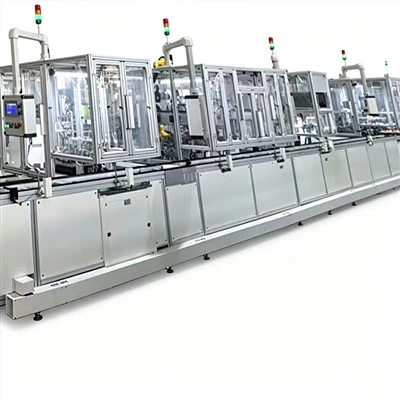
If you’re setting up a new brush motor assembly line, or retrofitting an old one to fix reliability issues and boost production, the gearboxes you choose aren’t just a component — they’re a strategic investment. We’ve helped dozens of clients optimize their lines with custom gearbox solutions tailored to brush motor-specific tasks, cutting defect rates, reducing downtime, and increasing their overall output. We don’t just sell assembly lines; we work with you to understand your unique needs, design gearboxes that fit your line and your production goals, and support you long after installation. If you’re ready to talk about how to make your brush motor line run better, don’t hesitate to reach out. We’re here to help you build a line that delivers consistent, high-quality brush motors, on time, every time.
Hairpin EV Motor Assembly Line References
- Bolton, W. (2017). Machine Design: For Engineers and Technicians. Routledge.
- Brush Motor Assembly Standards. (2021). International Electrotechnical Commission (IEC) Publication 60034.
- Gearbox Selection for High-Volume Manufacturing. (2020). Society of Manufacturing Engineers (SME) Technical Report.
- Precision Motion Control for Automotive Assembly. (2019). SAE International Journal of Materials and Manufacturing.
Juli Aoxuan Technology (Zhejiang) Co., Ltd.
Juli Aoxuan Technology (Zhejiang) Co., Ltd. is one of the most professional brush motor assembly line manufacturers and suppliers in China. With abundant experience, we warmly welcome you to buy durable brush motor assembly line made in China here from our factory. If you have any enquiry about cooperation, please feel free to email us.
Address: No.28, Guangming Middle Road, Haiyou Street, Sanmen County, Taizhou City, Zhejiang Province, China
E-mail: sales05@juli-china.com
WebSite: https://www.juli-winding.com/
