If you’ve ever installed a screen door that won’t stop slamming, adjusted a trampoline’s tension to keep it bouncy enough, or replaced the spring on a garage door that’s starting to sag, you’ve already encountered a spiral spring. As a spiral spring supplier, I get calls every week from customers wondering why a spring that worked perfectly last month is suddenly stiff, weak, or acting entirely different than it was when we shipped it. Most assume stiffness is a fixed number stamped into the metal when it’s made—but that’s not the whole story. Stiffness (that technical term is spring rate, for anyone who likes the jargon) changes over time, and it’s not just a random quirk of metal. It’s a predictable, science-backed process, and understanding it can save you from downtime, wasted money, and a whole lot of frustration. Spiral Spring
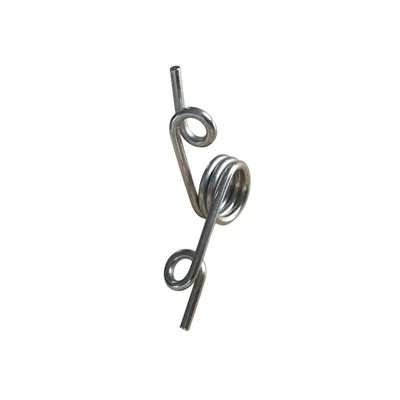
Let’s start with the basics, because when I’m explaining this to a new customer, I always ground it in what they already know about how spiral springs work. A spiral spring is a long strip of flat metal wound into a tight spiral, right? When you twist the two ends—one fixed to a mounting point, the other to whatever part it’s powering or supporting—the metal bends along its length. The stiffness is how much force is needed to twist it a certain amount; a stiffer spring takes more force, a weaker one takes less. But here’s the thing: metal isn’t a solid, unchanging block. It’s made of tiny, crystalline grains, and those grains shift, stretch, and settle over time. That’s where the change in stiffness comes from, and there are three main factors driving it: stress relaxation, fatigue, and environmental wear.
Stress relaxation is the most common culprit, and it’s the one that surprises most people. I learned about this early on in my career, when a customer called saying we’d sent 50 garage door spiral springs that went stiff within three weeks of installation. When I asked how they were stored, they said the warehouse stacked them on a shelf for two months before putting them into service. Turns out, those springs had been wound to a fixed tension during manufacturing, and when they sat under that constant load for so long, the metal crystals shifted to relieve the stress. It’s not that the spring got weaker or stronger—it adjusted its shape to match the load it was under. Over time, that shape shift reduced the effective tension, which the customer interpreted as stiffness changing, and in that case, it was an unexpected drop in tension that made the springs work differently than expected.
Wait, let’s clarify: stiffness change can go both ways, right? Sometimes springs get stiffer over time, sometimes weaker. Stress relaxation is usually a gradual softening, but if the load is different—like if a spiral spring is holding a door partially open for years, the constant bend can make the metal creep, which is a slow, permanent deformation under sustained stress. Creep is a big deal for high-temperature applications too, which is a segment I’ve worked in a lot. For customers in automotive or industrial oven parts, where spiral springs operate at 150°C or higher, creep accelerates dramatically. At those temperatures, the metal’s molecular bonds loosen, and the grains can slide past each other much faster than at room temp. A spring made for a standard room-temperature door might lose 10-15% of its stiffness in a year at 200°C, while a high-temperature alloy I offer for those applications only loses 3% in the same time frame. That’s why matching the alloy to the operating environment isn’t just a box to check—it’s the difference between a spring that lasts a year and one that lasts a decade.
Next is fatigue, which is a change from repeated use. Think about a spiral spring on a screen door that opens and closes 10 times a day. Every time you twist it, the metal bends just a tiny bit, then bounces back. Over thousands of cycles, those tiny bends add up, and micro-cracks start to form along the grain boundaries. At first, you won’t see them, but they weaken the spring, and that makes it less stiff. It takes less force to twist it, because the cracks let the metal flex more easily. I had a customer last year in the agricultural space who had spiral springs on tractor seat suspension that were failing every 6 months. They were cycling 20 times an hour, every day, during planting season, so that’s 15,000 cycles a year. A standard carbon steel spring would start to fatigue around 10,000 cycles, losing 25% of its stiffness and then snapping. When we switched them to a chrome-vanadium alloy, which has higher fatigue resistance, they hit 50,000 cycles with less than 5% stiffness change. That’s the kind of real-world win I live for as a supplier—solving a problem by matching material properties to use case.
Fatigue isn’t always about repeated twisting, either. For spiral springs that hold a constant position for years, like a hinge spring on a commercial gate, corrosion plays into fatigue too. If the metal starts to rust, tiny pits form on the surface, and those pits act as stress raisers, making micro-cracks form much faster. That leads to both stiffness loss and premature failure. I work a lot with coastal businesses, where salt air is a constant issue. A stainless steel spiral spring rated for marine environments will have a corrosion-resistant coating that slows that pitting, so the fatigue rate is cut in half. It’s not just the rust itself—it’s how that rust amplifies wear over time.
Then there’s environmental wear that’s less talked about, like friction and oxidation. Wait, spiral springs aren’t just the flat metal strip—they have sides, right? When a spring is wound, the coils rub against each other as it twists. Over time, that friction wears down the surface of the metal, creating tiny particles that get between the coils and change how they interact. If the coils start to stick together, the spring will feel stiffer when you first twist it, then suddenly release, which feels like stiffness changing in a very uneven way. I had a customer who installed spiral springs on a hospital bed mechanism, and nurses complained the beds would lurch when adjusting them. The issue was that the standard uncoated springs were generating tiny metal shavings that got trapped between the coils, causing intermittent binding and stiffness spikes. We switched them to a dry lubricant-coated spring, and that eliminated the binding entirely, with less than 2% stiffness change over two years of daily use. That small coating change fixed a problem no one had connected to spring stiffness before.
Now, I know what you’re thinking: is there a way to stop this? Customers always ask if they can have a spring that never changes stiffness. The short answer is no, because metal will always respond to load, temperature, and time. But you can slow the change down a lot by making smart choices early on. First, pick the right alloy for your operating conditions. If it’s room temperature, regular carbon steel works fine for short-term use, but if it’s high temp or high cycle, go for chrome-vanadium, stainless steel, or even a specialty alloy like Inconel for extreme environments. Second, specify proper surface treatments: dry lubricants, powder coatings, or passivation for corrosion resistance all reduce friction and wear. Third, don’t leave springs under constant tension in storage—if you’re shipping or storing springs before installation, loosen them slightly to reduce pre-load, which cuts down on stress relaxation before they even go into service.
I also want to bust a common myth here: some people think a spring that changes stiffness is “bad quality.” That’s not true. Every spring will change to some degree, because that’s how metal behaves. The difference between a good spring supplier and a great one is that we understand those changes, we test our springs under real-world conditions to predict how they’ll perform over time, and we can adjust the design to match your specific needs. For example, last year a customer from the aerospace industry came to me with a spiral spring for a satellite door that needed to maintain within 1% of its original stiffness for 15 years, in a vacuum and extreme temperature swings. We worked with them to design a spring with a pre-load calibrated to minimize stress relaxation, a precipitation-hardened stainless steel alloy to resist fatigue, and a polished surface to reduce friction. The first batch went into testing last month, and the lab results show they’re already holding within 0.8% stiffness after 2,000 hours of simulated space conditions. That’s the kind of precision work I’m proud to be part of.
The thing I’ve learned after 12 years in the spiral spring business is that stiffness change isn’t a flaw—it’s a predictable behavior. Too many customers install a generic spring, don’t account for how it will change over time, and end up with a part that fails when they need it most. Whether you’re making garage doors, medical devices, agricultural equipment, or aerospace components, taking the time to understand how your spring’s stiffness will change over its life saves you money, reduces downtime, and means your product works as intended for years.

If you’re dealing with a spring that’s acting weird, or you’re designing a new product and want to get the stiffness right from the start, reach out to our team. We don’t just sell springs—we help you pick the right material, design the right tension, and make sure your part will perform exactly when you need it. No generic quotes, no one-size-fits-all solutions, just real advice from people who have been in this industry long enough to know what works (and what doesn’t). Get in touch to chat through your needs, and let’s make sure your spiral spring works as well as it should, for as long as it needs to.
Leaf Spring References
Norton, R. L. (2020). Machine Design: An Integrated Approach (5th ed.). Pearson.
Ashby, M. F., & Jones, D. R. H. (2012). Engineering Materials 2: An Introduction to Microstructures, Processing and Design (4th ed.). Butterworth-Heinemann.
Suresh, S. (1998). Fatigue of Materials (2nd ed.). Cambridge University Press.
Shengzhou Deyuxiang Hardware Accessories Co., Ltd.
We are one of the most professional spiral spring manufacturers and suppliers in China, also support customized service. With abundant experience, we warmly welcome you to buy high quality spiral spring made in China here and get pricelist from our factory. For price consultation, contact us.
Address: No. 38, Caosheng Road, Caoqiao Street, Pinghu City, Jiaxing City, Zhejiang Province
E-mail: 877286126@qq.com
WebSite: https://www.dyx-spring.com/
