If you’ve ever had a phone battery die mid-commute, a power tool pack conk out before a job’s done, or a kid’s remote-controlled car go quiet right when the race starts, you’ve probably grabbed any old charger you had lying around to top it up. As someone who’s run a battery charger supply business for the better part of a decade, that’s a question I get asked at least three times a week: Do all battery chargers have over-charge protection? The short, honest answer? No—not even close. Let me break this down, because getting this right isn’t just about keeping gadgets working; it’s about preventing fires, extending battery life, and saving you from wasting hundreds of dollars on replacements. Battery Charger

First, let’s talk about what over-charge protection actually is, because there’s a lot of confusion on that front. Lithium-ion and lithium-polymer batteries—the ones in phones, laptops, power tools, and e-bikes—are the worst when it comes to over-charging. Unlike old nickel-cadmium (NiCd) or nickel-metal hydride (NiMH) packs, which would just hold their charge a bit less well if you left them plugged in too long, lithium cells have a sensitive chemistry. If you keep pushing charge into them once they hit their maximum voltage (around 4.2 volts per cell for standard lithium-ion), a few bad things happen. The electrolyte inside breaks down, producing gas that swells the battery, can cause leakage, and in extreme cases—especially if paired with heat from charging or a damaged cell—can lead to thermal runaway. That’s the kind of thing that makes battery news for blowing up a phone or a hoverboard. Over-charge protection is the safety circuit built into a charger that cuts off or reduces power to the battery once it reaches that safe maximum voltage, so you don’t have to babysit your charger.
Now, why don’t all chargers have this? Let’s go back to the early days of consumer electronics. When I first started in this business in the mid-2010s, low-speed chargers for things like cordless landline handsets, old kids’ toys, or basic AA/AAA NiMH packs were mostly bare-bones, no-frills units. Back then, NiMH batteries could handle a little extra charge over time without blowing up, and manufacturers wanted to keep costs as low as possible. A charger without over-charge protection cost 20 to 30 percent less to make than one with a basic circuit. For cheap, one-off devices that most people would replace in a year or two, that was seen as a reasonable trade-off. I still see these on sale at dollar stores or random online marketplaces today—branded with no real manufacturer name, sold as “universal” chargers for everything, and priced so low you’d be silly to pay more for them. Those are the ones I warn every customer to stay away from, because they often lack any safety features at all.
Fast-forward to today, and most branded chargers for high-drain devices—phones, power tools, e-cigarettes, e-bikes—do have over-charge protection, but not all of it’s created equal. It’s not just a single on/off switch. There are tiers, and cutting corners happens even with some “brand-name” chargers. For example, some budget power tool chargers will cut power once the battery hits 4.2V, but they don’t have temperature monitoring. If the battery is damaged, or the charger is sitting in a hot garage in the summer, it might still overheat even if it stops delivering full charge. Higher-end chargers add that temperature sensor, and some even trickle a tiny amount of power to keep the battery topped up just enough to stay at 100 percent, without going over, which is important for devices you might not use for months—like a lawnmower battery or a backup generator battery. The bare-bones no-name chargers I mentioned? They often don’t have that either. They’ll keep pumping current into the battery even once it’s full, which slowly degrades the cells over months or years, cutting their total capacity by 20 or 30 percent faster than they should.
I learned this the hard way early in my career. A small construction company came to me a few years back, saying their set of 18V power tool batteries were dying after just six months, instead of the two years they should last. They’d been buying off-brand chargers online for $10 each, way cheaper than the brand-name ones that cost $40. When I tested their old chargers, they’d deliver 2.5 amps to the battery even after it hit 4.2V—they had no over-charge cutoff at all. Over time, that extra current broke down the lithium cells, and the batteries were so degraded they were barely holding a charge. We sold them a set of our mid-tier chargers with full over-charge protection, and within a month, their battery life was back to normal. That experience drove home for me how important it is to educate people, not just sell them a product.
Another thing to consider: device-integrated vs. standalone chargers. A lot of people think their laptop’s built-in charger has protection, and it does, but if you buy a third-party replacement charger that’s generic, it might not. Last year, a customer brought me a set of 20 laptop batteries that had swollen, and when we tested the third-party chargers she’d bought, none of them had over-charge protection for lithium-ion. The manufacturer didn’t want to add the extra cost, so they skipped the cutoff circuit entirely. It’s a common trick for cut-rate third-party accessories. Even some car chargers for phones—you know, the ones that plug into the cigarette lighter—can skip over-charge protection if they’re not made for the specific phone model. They’ll charge the battery, but if you leave it plugged in while the car’s off, they might keep topping it up, leading to overcharging.
Now, let’s talk about the exceptions, because not all batteries need the same over-charge protection. NiCd and NiMH batteries, for example, don’t have the same thermal runaway risk as lithium-ion. A charger for a NiMH AA battery might only have a basic over-discharge protection, but very rarely over-charge protection, because the chemistry doesn’t react the same way. That’s why you can leave your old NiMH cordless handset plugged in for weeks and it won’t blow up, even if it doesn’t have a fancy circuit. But that’s specific to those older chemistries, not the lithium batteries most people use every day now.
So, what should you look for if you need a safe charger? First, check the product specifications. Any reputable charger for lithium-based devices should explicitly list “over-charge protection” as a feature, along with “over-voltage protection” and “temperature monitoring.” Avoid any charger that doesn’t list these, especially if it’s for a phone, power tool, or e-bike. Second, buy from a trusted supplier, not random marketplaces or dollar stores. A charger costs a little more, but it’s worth it to save your battery and your property. Third, if you’re buying a charger for professional use, like for a construction team or a fleet of e-bikes, invest in chargers that have multiple layers of safety—over-charge, over-voltage, over-current, and short-circuit protection. Those are the ones that will last, keep batteries safe, and not cost you money in replacements.
At our company, we build all our chargers with full over-charge protection, and for most of our models, we add the extra temperature and current monitoring to make them safer for long-term use. We’ve seen first-hand what happens when a cheap charger skips that circuit—swollen batteries, damaged devices, even small fires in a few rare cases. That’s why we don’t cut corners, even when customers ask for the cheapest possible unit. We offer tiered pricing, so you can get a basic safe charger for personal use, or a higher-end industrial charger for large fleets, but every single one of our chargers has over-charge protection. We also provide testing for customers who need to make sure their existing chargers are safe—if you send us a unit, we can run diagnostics to check its over-charge cutoff and other safety features, so you know if it’s worth keeping or replacing.
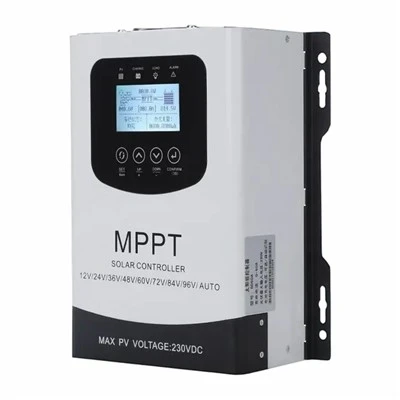
If you’re tired of dealing with short battery life, worried about the safety of your chargers, or need a reliable supply of chargers for personal or business use, we’re here to help. We work with individual consumers, small businesses, and large fleets across the country, and we can help you find the right charger for whatever battery you’re using, whether it’s for a phone, power tool, e-bike, or something else entirely. Reach out to our team to discuss your needs, get a quote, or ask any questions about charger safety or specifications. We’re always happy to help, no matter the size of your project.
Battery Charger References
Battery University. (2024). Understanding Lithium-Ion Charging and Safety. Retrieved from Battery University’s online technical library.
Consumer Product Safety Commission. (2023). Safety Risks of Uncertified Battery Chargers and Batteries. Retrieved from CPSC.gov public safety database.
International Electrotechnical Commission. (2022). IEC 62133:2022 Safety Requirements for Portable Sealed Secondary Cells and Batteries. Retrieved from IEC.org international standards repository.
Huizhou Qiangfeng Power Technology Co., Ltd.
Huizhou Qiangfeng Power Technology Co., Ltd. is one of the most professional battery charger manufacturers and suppliers in China, featured by quality products and good service. We warmly welcome you to buy customized battery charger made in China here from our factory. If you have any enquiry about quotation and free sample, please feel free to email us.
Address: No. 28, Hu’ao Avenue, Shiwan Town, Boluo County, Huizhou City, Guangdong Province
E-mail: Komco@Jinlidianqi.cn
WebSite: https://www.autobatterychargers.com/
