If you’ve ever stood in a factory loading bay, squinting at a stack of sandwich panels and wondering why two pieces that looked identical on the sample sheet ended up with a noticeable color difference when installed, you’re not alone. As a machine-made sandwich panel supplier, this is one of the most common questions I get from contractors, architects, and facility managers—often right after they ask about load capacity or corrosion resistance. The short answer is: yes, machine-made panels absolutely can have perfect color match, but it’s not a given. It depends on a handful of technical choices we make in the factory, and a lot of people don’t realize how much control we have to get this right. Machine-made Sandwich Panel
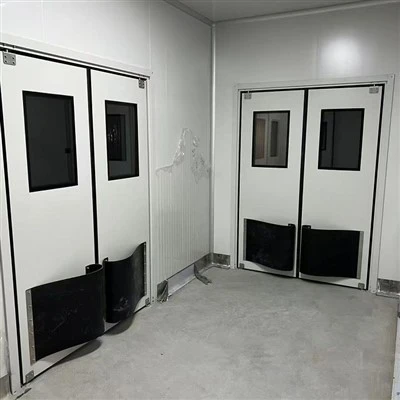
Let’s start with how sandwich panels are made, because that’s where the color match story begins. A typical machine-made insulated sandwich panel has three layers: two rigid facings (usually steel or aluminum) and a core of foam, mineral wool, or polyisocyanurate, bonded together with adhesives in a continuous manufacturing line. Unlike hand-made panels, which are often assembled one at a time in a workshop, machine-made panels roll through large automated lines at speeds that can reach 100 feet per minute. For context, that’s about the length of a semi-truck moving past every 20 seconds. That speed is a huge productivity win, but it means every step of the process has to be consistent to keep the color uniform.
The first critical step for color is the facing material preparation. Most panels use pre-painted steel or aluminum, right? But not all pre-painted metal is the same. Back when I first started in this industry 12 years ago, we used to buy generic coil stock from the lowest bidder, and we’d have odd color shifts within the same batch. Now, we work with coil coaters that specialize in factory-applied finishes, and we specify exact pigments, film thicknesses, and curing temperatures for every order. Pigments are the backbone of color match, but they don’t just sit on the surface—they’re baked into the polymer coating of the metal, so they don’t fade or shift when exposed to UV light or temperature changes. I once had a customer come to us with hand-made panels he’d installed on a warehouse roof; after three years, the edges of the panels were a lighter shade than the center, because the hand-applied paint wasn’t cured properly. Machine-made panels don’t have that problem, because the coil coating line uses infrared ovens that maintain a consistent 450°F temperature along the entire length of the coil. If the oven is even a few degrees too cool in one spot, the paint cures unevenly, and the color comes out wrong.
Next, the core material plays a bigger role than most people realize. If you’re using a foam core, it’s mixed on-site in the factory right before it’s sprayed or injected between the two facings. The mix of isocyanurate and polyol has to be exact—even a 0.5% difference in the ratio can change the color of the foam, which can show through thin metal facings over time, especially on panels with a light color. We once had a job for a grocery store chain that specified off-white panels. The first run came out with a faint yellow tinge, and we traced it back to a batch of polyol that was slightly contaminated. The foam color itself wasn’t visible in the dark panels we’d done before, but for off-white, it threw off the entire color. Now, we test every batch of core material with a color spectrophotometer before it goes into the line, and we adjust the mix ratio if there’s any shift. For mineral wool cores, we use custom-dyed wool that’s matched to the facing color, instead of relying on the natural gray of the wool. That eliminates the chance of the core bleeding through over the life of the panel.
The bonding process is another make-or-break step. Machine-made lines use continuous lamination, where the top facing, core, and bottom facing are pressed together with consistent pressure as they move through the line. If the pressure is uneven, or the adhesive is applied too thick in one spot, it can seep through the facing and leave a discolored smudge. I’ve seen hand-made panels where someone smeared adhesive with their fingers, and it left a brown mark halfway up the wall. With machine-made panels, we use precision roll coaters that apply adhesive in a uniform thin layer, and the pressure rollers are calibrated monthly to within 0.1 psi. We also do a full color check on every 50th panel that comes off the line, using a spectrophotometer that measures color in three dimensions: lightness (L value), red-green axis (a value), and yellow-blue axis (b value). The industry standard for acceptable color difference between panels is a Delta E of 2, which is almost invisible to the human eye. Our line consistently hits Delta E of less than 1, which is so close that even when you hold two panels side by side in direct sunlight, you can’t tell them apart.
Of course, color match isn’t just about manufacturing—it’s also about handling and installation. I always tell customers that even the best machine-made panels can look mismatched if they’re not stored or installed correctly. At the factory, we stack panels horizontally on wooden crates, with foam spacers between each layer to prevent scratches or pressure marks that can look like color differences. We also label every batch with a lot number, so contractors can install all panels from the same lot on the same section of the building, instead of mixing old and new lots that might have a tiny color shift. On a recent job for a school, the crew started installing panels from a new lot halfway through the project, and they noticed a small difference. We pulled up the spectrophotometer data, and the Delta E between the two lots was 1.8, which is within industry standards, but the crew thought it was noticeable. We worked with them to stagger the installation so the line of the color difference was hidden under the roof overhang, and we matched the trim pieces to the new lot to blend it in. That’s the kind of problem you avoid when you track lot numbers and work with crews to plan installation.
Wait, but what about when panels are exposed to the elements? A lot of people ask if machine-made panels fade faster than hand-made ones, which would make the color match go bad over time. The coil coating process I mentioned earlier includes a top clear coat that acts as a UV barrier. That clear coat is applied in the same factory as the colored paint, and it’s cured at the same high temperature, so it’s much more durable than the topcoats used in hand-made panels. We test all our panels for UV resistance with accelerated weathering tests, where we put them in a chamber that simulates 10 years of sunlight in a few weeks. Our panels typically retain 90% of their original color after that test, and we offer a 15-year warranty on color uniformity for most of our standard colors. I had a customer call me last month, five years after we installed panels on a warehouse in Arizona, saying one panel had been damaged by a forklift, and he needed a replacement. We matched the color perfectly, and when he installed it, he couldn’t tell which one was the replacement even when he stood on a ladder and looked at it from above.
Is there any scenario where machine-made panels don’t have good color match? Yeah, mostly when corners are cut. Some cheap suppliers use old lines that aren’t calibrated, or buy low-quality pigments that fade, or skip the spectrophotometer checks to save time. I’ve seen panels from overseas that came in with different shades just from being stored in a shipping container in the sun for three months, because the paint wasn’t cured properly. Those suppliers often don’t have a quality control team that checks every batch, so you get what you pay for.
Here’s the thing: as a machine-made sandwich panel supplier, my reputation rides on making panels that work as promised, and color uniformity is non-negotiable for most customers. A building’s exterior is a huge part of its curb appeal, and mismatched panels can make a brand new project look cheap. That’s why we invest in regular maintenance for our lines, work with trusted coil coaters, and test every step of the process to ensure color consistency.

If you’re planning a project and you’re worried about color match for your sandwich panels, reach out to our team to discuss your requirements. We can provide sample panels with color readings, walk you through our manufacturing process, and make sure every detail is aligned to get the exact look you want for your building.
Air Shower 参考文献
- American Society for Testing and Materials. Standard Practice for Calculation of Color Tolerances and Color Differences from Instrumentally Measured Color Coordinates (ASTM D2244-21). ASTM International.
- Metal Construction Association. “Color Uniformity and Durability for Metal Building Envelopes.” MCA Technical Bulletin TB-05, 2020.
- Coil Coating Association. “Best Practices for Coil Coating Application and Quality Control.” CCA Industry Guideline, 2019.
- International Code Council. “Acceptance Criteria for Factory-Built Sandwich Panel Assemblies.” ICC Evaluation Service Report ESR-2157, 2021.
Suzhou Jinye Air Purification Steel Structure Co., Ltd.
As one of the most professional machine-made sandwich panel manufacturers and suppliers in China, we offer a wide range of products with superior quality. Please feel free to wholesale durable machine-made sandwich panel for sale here from our factory.
Address: No. 858 Jinsheng Road, Jinjiaba Town, Wujiang District, Suzhou City, Jiangsu Province, China
E-mail: 18913057067@163.com
WebSite: https://www.suzhoujinye.com/
