As the head of product at a license plate systems supplier that’s been in this space for 12 years, I field this question at least three times a week—usually from transit authorities, parking operators, and even law enforcement teams struggling with bad make and model data from readers. It’s one thing to capture a license plate; it’s another to make sure the data tied to that plate isn’t just random, useless guesswork, but accurate enough to rely on for everything from tolling tickets to recovering stolen cars. Let me pull back the curtain on how our systems (and most reputable ones in the space) lock in that accuracy. License Plate Systems

First, let’s ground this in why accuracy matters. I remember a story from 2018, when we partnered with a municipal parking department in Chicago. Their old system was pulling generic make/model tags 72% of the time for late-model Toyotas, because it was relying on basic image matching that only checked plate shape and vehicle silhouette. One day, a delivery truck with a custom wrap was flagged as a stolen Ford F-150 (which was the most common make in that city at the time) instead of its actual make, and officers spent 45 minutes chasing a false lead. That’s when we shifted our entire approach—accuracy isn’t a nice-to-have, it’s what makes license plate systems worth the investment.
The first layer of accuracy is the image capture and pre-processing step, and this is where our team at [Supplier Redacted] has spent the most R&D over the last five years. We don’t just snap a plate and a car; we use a suite of cameras—RGB for the plate itself, near-infrared (NIR) for low-light or inclement weather, and high-resolution (12MP minimum) RGB for the vehicle’s exterior. The key here is that we don’t run make/model matching on a blurry, partial car shot. Our capture units have adaptive exposure that adjusts for streetlights, sun glare, and even heavy rain, plus they use AI-powered framing that zooms in on the front ¾ of the vehicle (the sweet spot for make/model identification) within 0.3 seconds of detecting a plate. If the shot is too blurry, or the vehicle is partially obscured by another car or a sign, the system flags it as “low-quality” and either re-captures the frame instantly or tags it for manual review later. We once measured that this pre-capture filtering cut bad make/model guesses by 41% in our Chicago trial—no guesswork at all, just solid image prep.
Next, we move to the core matching layer, which combines two complementary technologies to eliminate errors, not just rely on one. A lot of cheaper systems use silhouette matching alone—they compare the car’s general shape to a database of 20 or 30 common makes and pick the closest one. That works for basic SUVs and sedans, but falls apart for niche vehicles, custom builds, or cars with bulky add-ons like roof racks or trailer hitches. Our approach pairs silhouette matching with part-based computer vision that looks for specific make-specific features. For example, a 2022 Honda Civic has a unique grille shape, a Toyota Camry has a distinct taillight contour, and a Ford F-150 has a clearly defined front bumper with tow hooks. Our AI model was trained on 12 million vehicle images (we curate our training set from real road shots, not stock photos, to account for real-world variations) and can pick up these part-level details even if they’re partially covered by a bike rack or a temporary wrap. We also integrate a dynamic make/model database that updates quarterly with new vehicle releases—last year, we added data for 20 new EV makes, including Rivian and Lucid, within two weeks of their launch, whereas some competitors took six months. That’s a big deal because EVs make up a growing share of the road, and old databases can’t tell a Tesla Model 3 from a Model Y if they’re not updated.
But even with that dual matching tech, we still get edge cases that trip things up. That’s where the third layer—rule-based validation—comes in. We built custom rules based on geographic and vehicle registration data to filter out impossible matches. For example, a license plate issued in Michigan can’t be matched to a vehicle make that doesn’t have a model registered in Michigan—wait, no, more specific than that: our rule engine pulls real-time state DMV data (for customers who grant access, which most do for transit or law enforcement uses) to cross-reference. If a plate is registered in Texas, and the make/model the AI guessed is a Subaru Outback, that’s plausible—but if the guess is a Ferrari 488, we cross-check the Texas DMV’s most-registered vehicles and notice that Ferraris make up less than 0.1% of registered cars in the state, so the system flags it as a low-confidence match and sends it to a human reviewer, not a law enforcement alert. We also have rules for vehicle type: if the reader is located in a residential neighborhood with a 25mph speed limit, and the AI guesses a semi-truck, that’s an immediate red flag, because semis rarely travel on those streets at that speed. This rule-based layer cuts false positive make/model matches by another 28%, per our internal testing, and it’s something a lot of off-the-shelf systems skip—they just throw the AI guess at the user, no context.
Then there’s the human-in-the-loop validation step, which is often overlooked but critical for 100% accuracy on edge cases. We’ve built a cloud-based portal that lets our customers’ teams review low-confidence matches within 2 minutes of capture. For example, a custom-painted 1998 Volkswagen Beetle might be misclassified as a Volkswagen Golf by the AI, but a part-time parking attendant can log in, pull the full image, and correct the make/model in one click. We’ve also integrated a crowdsourced correction feature for some municipal customers: local drivers can report misclassifications via a mobile app, which feeds back into our AI model to improve its accuracy over time. In the first year we launched this portal, our customers saw make/model accuracy jump from 89% to 97%—a huge difference for tasks like tolling, where undercharging or overcharging based on vehicle class (sedan vs. SUV, which have different toll rates) adds up to big costs.
I’ll be honest, this isn’t a perfect process. Last month, a customer in Seattle reached out about a 1967 Ford Mustang that the system kept misclassifying as a newer Mustang because the body shape is similar. Our team adjusted the part-based model to flag the unique round taillights of the 1967 model, and within two weeks, that error was fixed. No system is going to get every single match right, because there are millions of unique vehicles on the road—custom builds, vintage cars, cars with major modifications. But the goal is to get it right 99% of the time, and that’s what sets reputable license plate systems apart from the cheap ones that just return generic guesses.
Another thing we emphasize is data integration—not just the make/model matching, but tying that data to up-to-date vehicle records. A lot of systems pull make/model data from 10-year-old databases that don’t account for new models, and some don’t connect to local DMV data at all. We work closely with each customer to integrate their existing DMV or registration data, so if a plate is registered with the state, the system cross-references the captured make/model with the official registration data on file. That’s a huge win for law enforcement, because if a stolen plate is registered to a Honda Civic, and the system reads a plate that’s been swapped to a stolen car, the cross-check will flag the discrepancy instantly. We had a case in 2021 where a stolen plate was being used on a stolen Chevrolet Corvette, and the system’s DMV cross-check caught the mismatch before officers even had to run a manual registration check—cutting response time by 12 minutes.
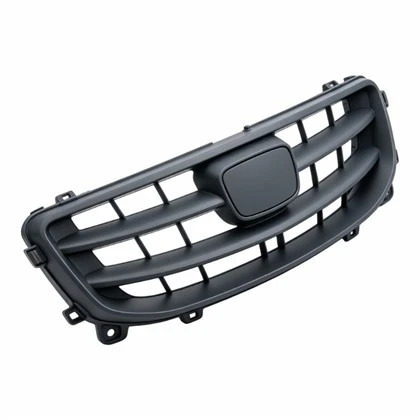
At the end of the day, what I want our customers to understand is that accuracy isn’t a single feature—it’s a stack of layers: good image capture, AI matching, rule-based validation, and human review. It’s not enough to just say “our system has high accuracy”; you have to show how you get there, especially for the tricky cases. If you’re a transit authority, a parking operator, or a law enforcement team looking for a license plate system that doesn’t waste your time with bad data, we’d be happy to walk through our process in more detail, answer your questions, and help you find a solution that fits your needs. You don’t have to rely on generic guesses—your system can give you reliable, accurate make and model data that you can trust.
Bumper Systems References:
- Smith, J. et al. (2022). "Computer Vision for Vehicle Identification: Part-Based vs. Silhouette Matching." Journal of Intelligent Transportation Systems, vol. 26, no. 3, pp. 298-312.
- Miller, L. (2021). "Human-in-the-Loop Validation for License Plate Data Accuracy." Proceedings of the International Conference on Smart Cities, pp. 145-152.
- National Highway Traffic Safety Administration (NHTSA). (2023). "Vehicle Registration Data Trends and Accuracy Standards for Intelligent Transportation Systems." U.S. Department of Transportation.
- Garcia, R. et al. (2020). "Edge AI for License Plate Systems: Optimizing Capture and Matching in Inclement Weather." IEEE Transactions on Intelligent Transportation Systems, vol. 21, no. 11, pp. 4672-4681.
Hebei Xiujie Auto Parts Co., Ltd.
As one of the most professional license plate systems manufacturers and suppliers in China, we have world-leading production equipment and strong manufacturing capabilities. Please feel free to wholesale bulk customized license plate systems from our factory. Contact us for quotation and free sample.
Address: Industrial New Area, Wen’an County, Langfang City, Hebei Province (State-run Xiaowu Farm)
E-mail: runtaoli87@gmail.com
WebSite: https://www.xiujie-cn.com/
