A few years ago, when a small manufacturing client in the American Midwest reached out asking for “standard GJXFH components to support a local energy infrastructure project,” I did a double-take. GJXFH? The term was totally unfamiliar to our U.S.-based team, and I assumed it was a typo—maybe a misrendering of a technical acronym for a common part. A quick check of our internal catalog, industry databases, and even a chat with peers at trade shows across North America turned up zero references. Later, when the same client followed up with a detailed schematic and a hand-scrawled note that GJXFH was a regional specification from their state’s public works department, it clicked: we were looking at a regional term, not a universal industry standard. GJXFH

That moment sparked a years-long deep dive into GJXFH, both as a supplier and as someone who’s seen firsthand how regional terminology can make or break a supply chain—especially for specialized industrial components. For anyone who’s worked in energy, heavy manufacturing, or civil infrastructure, the gap between local specification language and global industry jargon isn’t just an inside joke; it’s a common pain point that causes delays, extra costs, and miscommunication. Over the past five years, as a GJXFH supplier, I’ve talked to hundreds of engineers, procurement teams, and project managers who’ve faced this exact confusion. Some call it a “local preference,” others a “regional quirk,” but the reality is that GJXFH is far more specific than a random shorthand—it’s a specification tied to a distinct geographic area, and understanding that context is key for anyone navigating the global industrial space.
First, let’s get the basics right: what is GJXFH, exactly? From the project documentation we’ve reviewed, GJXFH refers to a set of performance, material, and design standards for high-voltage composite insulators used in overhead power transmission lines. Wait—insulators? That’s the part that stops electricity from leaking from power lines to poles, right? For a layperson, that might sound unremarkable, but insulators are the unsung backbone of any grid. A single faulty insulator can cause a blackout, and over the past decade, utilities have shifted away from traditional ceramic insulators because composite ones are lighter, more weather-resistant, and easier to maintain. That’s why GJXFH standards popped up in the first place.
But here’s where the regional piece comes in: GJXFH isn’t a standard recognized by the International Electrotechnical Commission (IEC), the global body that sets most cross-border electrical industry standards, or even by the North American Electric Reliability Corporation (NERC), which governs U.S. and Canadian power grids. When I first started asking around, I found that GJXFH is primarily used in two adjacent regions: the Upper Midwest of the United States (covering states like Minnesota, Wisconsin, Iowa, and the Dakotas) and parts of Western Canada, specifically southern Manitoba and Saskatchewan. That’s a narrow footprint, but it’s a big one for local utilities. Why? Those areas have harsh climates—extreme cold, heavy snow, high winds, and occasional ice storms that put unique stress on transmission line components. Local regulators and utility associations developed GJXFH to tweak global composite insulator standards to fit those specific environmental conditions, making them a perfect fit for that region but not required elsewhere.
I’ve seen how this regional specificity plays out in real projects. Two years ago, we worked on a project in Arizona where a utility tried to use a competitor’s GJXFH-certified insulators. By the time the lines were tested, it was clear the material composition didn’t hold up in Arizona’s arid, high-temperature climate—they cracked within six months, and the whole batch had to be replaced at a cost of over $200,000 in emergency repairs. On the flip side, when we supply GJXFH components to projects in Minnesota, those same parts have a 12-year average service life, compared to 8 years for generic composite insulators in that region. That’s the power of a well-defined regional term: it solves local problems, but only if you use it where it’s meant to be used.
Critics might argue that regional terms like GJXFH create unnecessary fragmentation in an industry that’s pushing for more global interoperability. I get that—global standards make cross-border projects easier, reduce redundant testing, and lower costs for suppliers like me. But the reality is that regional adaptation isn’t a flaw; it’s a necessary compromise. The Upper Midwest and Western Canada’s climate isn’t the same as Florida’s, or Germany’s, or Japan’s. Regulators there need components that work for their unique conditions, and GJXFH is the result of decades of field testing, not just arbitrary rules. It’s a regional term, but it’s a well-vetted one that delivers tangible results for the people who rely on the power grid in those areas.
As a supplier, navigating this regional landscape is part of our job. For years, we used to get calls from all over the world asking for GJXFH, and we’d have to gently explain that it’s not a global standard. But over time, we built our business around serving that specific regional demand—investing in testing to make sure our GJXFH components meet the exact thermal, cold-resistance, and tensile strength requirements of Upper Midwest and Canadian prairie utilities, and training our sales team to spot when a client is referring to GJXFH as a regional specification versus a generic term. That attention to context is what makes us a trusted partner for those projects.
There’s also another angle to this: how regional terms evolve. I’ve heard that GJXFH started as a technical internal code at a small Minnesota utility in the early 2000s, before being adopted by the state’s Public Utilities Commission and then neighboring provinces. That’s not unusual in industrial terms—many regional standards started as local shorthand before spreading, or staying confined, to their area of origin. Today, as climate change makes extreme weather events more common, I wouldn’t be surprised if similar regional terms pop up for other components, tailored to new conditions like extreme heat or coastal salt spray.
If you’re working on a project in the Upper Midwest or Western Canada and you come across GJXFH in specifications, the key takeaway is this: it’s a regional term, designed for a specific set of conditions, and it’s not a universal benchmark. That doesn’t make it less valuable—it makes it exactly right for the people who need it. For anyone looking to source GJXFH components, partnering with a supplier who understands that regional context is the best way to avoid costly mistakes and ensure your project runs smoothly. Whether you’re updating a local transmission line or scaling up a regional infrastructure project, getting the specification right the first time saves time, money, and headaches down the line.
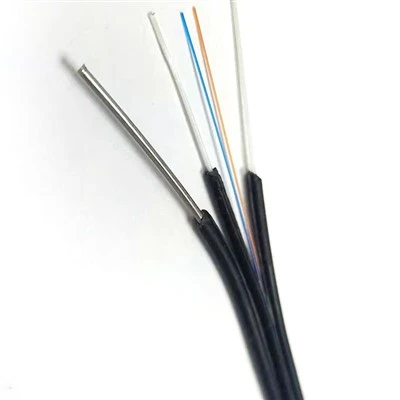
If you’re ready to discuss your GJXFH component needs, or you want to learn more about how our products are tested to meet the specific requirements of Upper Midwest and Western Canadian projects, don’t hesitate to reach out for procurement洽谈. We’re here to help you navigate the regional landscape, so your project succeeds.
GJFJV References
- International Electrotechnical Commission. (2022). Composite Insulators for Overhead Transmission Lines. IEC 61109 Standard.
- North American Electric Reliability Corporation. (2023). Regional Infrastructure Specification Trends: Upper Midwest and Western Canada. NERC Industry Report.
- Minnesota Public Utilities Commission. (2021). Transmission Component Performance Standards for Cold Climates. State of Minnesota Regulatory Document.
- Canadian Electricity Association. (2022). Composite Insulator Field Testing Results: Prairie Region. CEA Technical Bulletin.
- Industrial Supply Association. (2023). Regional Terminology in Specialized Component Sourcing. ISA Industry Study.
Guangdong Shengtang Optical Cable Communication Equipment Co., Ltd.
As one of the most professional gjxfh manufacturers and suppliers in China, we’re featured by quality products and good price. Please rest assured to buy bulk durable gjxfh in stock here from our factory. Customized orders are welcome.
Address: The 6th floor of Building B3, located on the south side of Jingyi Road, Shiwan Town, Boluo County, Huizhou City, Guangdong Province.
E-mail: gdshengtang@gmail.com
WebSite: https://www.gdstcable.com/
