As a supplier of steel pipe processing equipment, I’ve witnessed firsthand the distinct characteristics and applications of hot – processing and cold – processing steel pipe equipment. In this blog, I’ll delve into the differences between these two types of equipment to help you make informed decisions when considering steel pipe processing solutions. Steel Pipe Processing Equipment

1. Basic Concepts
Hot – Processing Steel Pipe Equipment
Hot – processing of steel pipes involves heating the steel billet to a high temperature, typically above the recrystallization temperature (around 900 – 1200°C). This makes the steel more malleable and easier to shape. Hot – processing equipment includes heating furnaces, rolling mills, and extrusion presses. The heating furnace is used to heat the steel billet to the appropriate temperature, while the rolling mill and extrusion press are used to shape the heated steel into pipes.
Cold – Processing Steel Pipe Equipment
Cold – processing, on the other hand, is carried out at room temperature or slightly above. Cold – processing equipment mainly includes cold – rolling mills, cold – drawing machines, and pipe – bending machines. Cold – processing is used to further refine the shape, size, and surface quality of the steel pipes produced by hot – processing or to create pipes from steel strips.
2. Processing Principles
Hot – Processing
The key principle of hot – processing is to take advantage of the high – temperature plasticity of steel. When the steel is heated to a high temperature, its internal crystal structure changes, and the atoms can move more freely. This allows the steel to be easily deformed under relatively low pressure. For example, in a hot – rolling process, the heated steel billet is passed through a series of rolling mills, where the rollers gradually reduce the thickness and increase the length of the billet, forming a pipe.
Cold – Processing
Cold – processing relies on the mechanical properties of steel at room temperature. The equipment applies external forces to the steel pipe to change its shape. For instance, in cold – rolling, the steel pipe is passed through a set of rollers that compress and shape the pipe. Cold – drawing involves pulling the pipe through a die to reduce its diameter and increase its length.
3. Product Quality
Dimensional Accuracy
Cold – processing generally offers higher dimensional accuracy compared to hot – processing. In hot – processing, the high temperature can cause some thermal expansion and contraction, which may lead to slight variations in the dimensions of the final product. Cold – processing, being carried out at room temperature, can achieve more precise control over the pipe’s diameter, wall thickness, and length.
Surface Quality
Cold – processed steel pipes usually have a smoother surface finish. During hot – processing, the high – temperature oxidation can form a layer of scale on the surface of the steel pipe, which needs to be removed through additional processes such as pickling. Cold – processing does not involve high – temperature oxidation, resulting in a cleaner and more uniform surface.
Mechanical Properties
Hot – processed steel pipes often have better ductility and toughness due to the recrystallization process during heating. The high – temperature treatment can refine the grain structure of the steel, improving its overall mechanical properties. Cold – processed steel pipes, on the other hand, have higher strength and hardness because the cold – working process work – hardens the steel.
4. Production Efficiency
Hot – Processing
Hot – processing is generally more suitable for large – scale production. The high – temperature processing allows for rapid deformation of the steel, and the equipment can handle large – sized billets. For example, a hot – rolling mill can produce a large number of steel pipes in a relatively short time. However, the heating process requires a significant amount of energy, and the setup time for hot – processing equipment can be longer.
Cold – Processing
Cold – processing is more flexible in terms of production volume. It can be used for both small – scale and large – scale production. Cold – processing equipment is often easier to set up and adjust, allowing for quick changes in production requirements. However, the cold – working process is generally slower than hot – processing, especially when dealing with thick – walled pipes.
5. Cost Considerations
Equipment Cost
Hot – processing equipment, such as heating furnaces and large – scale rolling mills, is usually more expensive to purchase and maintain. The high – temperature operation requires special materials and insulation, which adds to the cost. Cold – processing equipment, on the other hand, is relatively less expensive, especially for small – scale cold – rolling and cold – drawing machines.
Energy Cost
Hot – processing consumes a large amount of energy for heating the steel billet. The energy cost can be a significant part of the production cost. Cold – processing, being carried out at room temperature, consumes much less energy, resulting in lower operating costs.
Labor Cost
The operation of hot – processing equipment often requires more skilled labor due to the complexity of the high – temperature process. Cold – processing equipment is generally easier to operate, which may lead to lower labor costs.
6. Applications
Hot – Processed Steel Pipes
Hot – processed steel pipes are widely used in applications where high ductility and toughness are required, such as in the oil and gas industry for transporting fluids over long distances. They are also used in construction for structural purposes, where the ability to withstand large loads and deformation is crucial.
Cold – Processed Steel Pipes
Cold – processed steel pipes are commonly used in applications that require high precision and a smooth surface, such as in the automotive industry for manufacturing parts like exhaust pipes and hydraulic cylinders. They are also used in the furniture and decoration industry due to their aesthetic appearance.
7. Conclusion and Call to Action
In conclusion, hot – processing and cold – processing steel pipe equipment have their own unique characteristics, advantages, and applications. The choice between the two depends on various factors such as production requirements, product quality, cost, and application scenarios.
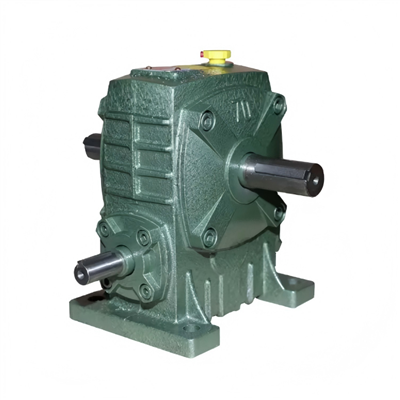
As a supplier of steel pipe processing equipment, we offer a wide range of hot – processing and cold – processing equipment to meet your specific needs. Whether you are looking for large – scale hot – rolling mills for mass production or small – scale cold – drawing machines for custom – made pipes, we have the solutions for you.
Pipe-making Machinery Spare Parts If you are interested in our steel pipe processing equipment or have any questions about hot – processing and cold – processing, please feel free to contact us for a detailed consultation. We are committed to providing you with the best equipment and services to help you achieve your production goals.
References
- "Steel Pipe Manufacturing Technology" by John Smith
- "Advances in Metal Processing" edited by Jane Doe
- Industry reports on steel pipe production and processing from leading research institutions.
Tianjin Binhai Yashanway Import and Export Co., Ltd.
Tianjin Binhai Yashanway Import and Export Co., Ltd. is one of the most reliable steel pipe processing equipment manufacturers and suppliers in China, also supports customized service with low price. Welcome to wholesale bulk steel pipe processing equipment made in China here from our factory. Contact us for quotation.
Address: B-508, Xiangnian Plaza, Dongjiang Road, Hexi District, Tianjin, China
E-mail: crystal@yashanway.com
WebSite: https://www.yashanway.com/
